
 Skip to content


Why travertine keeps showing up in every interior feed
Travertine is a type of limestone that forms around mineral springs, which is where its signature dimples and pitted texture come from. It offers a similar luxe look to marble, but with a softer, more organic character: the kind of material that feels considered rather than showroom perfect, which is exactly why it's had such staying power through the current shift toward texture forward, natural material interiors.
A travertine piece, a coffee table, side table or dining table with a top and often a base cut from the stone, is most commonly finished honed, giving a matte, smooth surface that shows off the stone's natural pitting and veining rather than hiding it. That visible texture is the whole point: it's a material that photographs beautifully but feels even better in person.
When in doubt, go white
White will always beautifully complement every colour and cut of this stone, so it's the safest base: use it on walls and larger furniture, and work around it from there. Warm whites and soft creams make especially good wall colours with travertine, since they pick up the stone's own undertones rather than fighting against them.
This is the easiest starting point if you're introducing travertine into a room for the first time and aren't sure how far to take the palette. A white or off white base gives the stone room to be the texture story in the space, without competing colours pulling focus.
Pairing travertine with colour
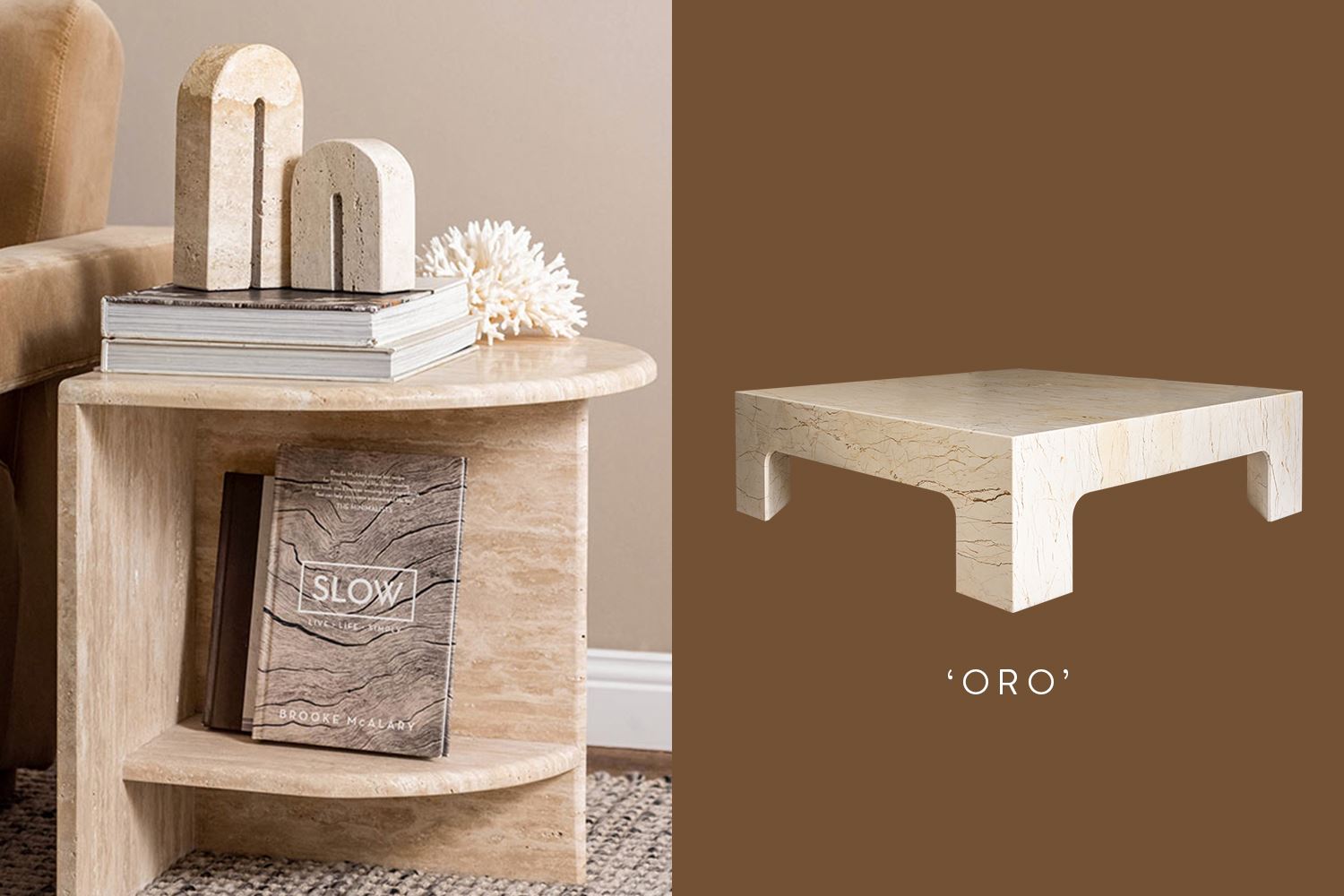
Rust tones, or anything with warm orangey brown shades, work particularly well with travertine, especially the creamy, beige types that contain yellow undertones. Those undertones are brought out by the orange shades, lending a deliciously warm and cosy ambience to the room. For more on this warm, earthy pairing direction, see our brown wall art ideas guide.
Yellow, creamy travertine also pairs surprisingly well with blues, including grey shades with blue undertones. Deep blues or peacock blues in particular are able to stand out against the neutral stone rather than disappearing into it. If you want a more dramatic, considered room, this blue and travertine pairing is worth exploring instead of defaulting to an all neutral palette.
Beyond the tabletop
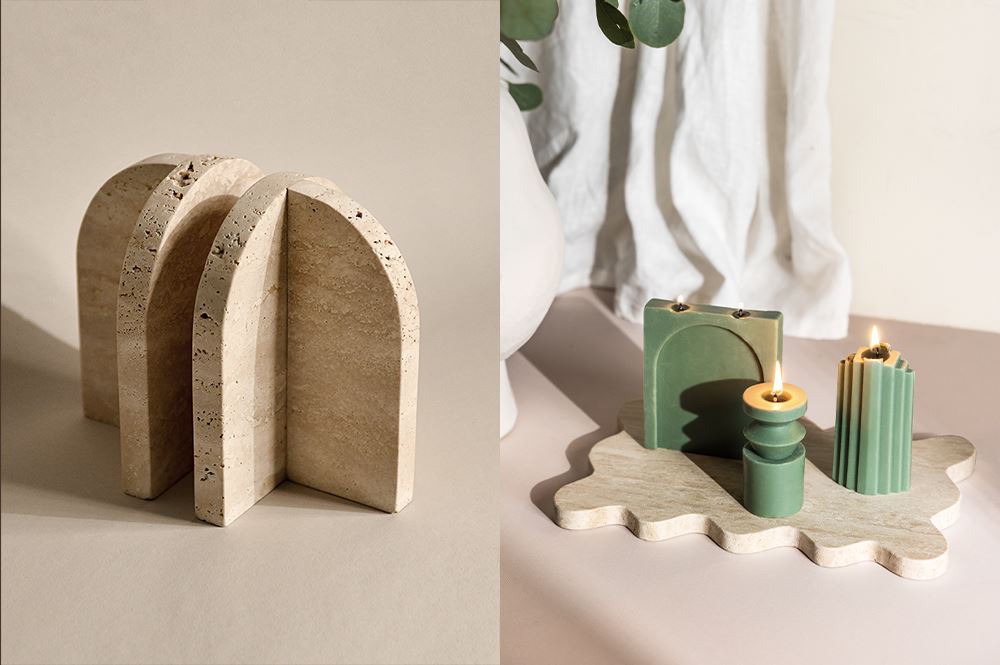
Travertine doesn't need to be a big ticket furniture purchase to work in a room. Trays, boards and candle holders bring the stone into everyday styling rituals: style them on open shelving or use a tray as a centrepiece with fruit or dried stems for a simple, low cost way to bring the material in.
For coffee and side tables, keep coasters on hand and use them consistently. Travertine is porous, and rings from glasses left too long can leave a mark. This is a small, practical care note that's worth including for anyone new to the material, since it's the most common travertine styling mistake.
Current products to shop
For anyone looking to bring travertine into their home right now, side tables remain the most accessible entry point, such as our Archer Side Table, ideal for living spaces or a bedroom depending on how you want to use the piece. Trays and smaller decor objects in travertine are a lower commitment way to test the material before investing in a larger furniture piece.
Pair it with the right art
Travertine's warm, textural surface pairs naturally with the same earthy, texture forward wall art currently trending across interiors, think layered abstracts or botanical pieces in warm neutral tones, which echo the stone's organic character rather than competing with it. Browse our textured wall art collection to find a piece that complements the material rather than fighting it, and see our brown wall art ideas guide if you want to build out a fuller earthy palette across the room.
A note on outdoor and semi-outdoor use
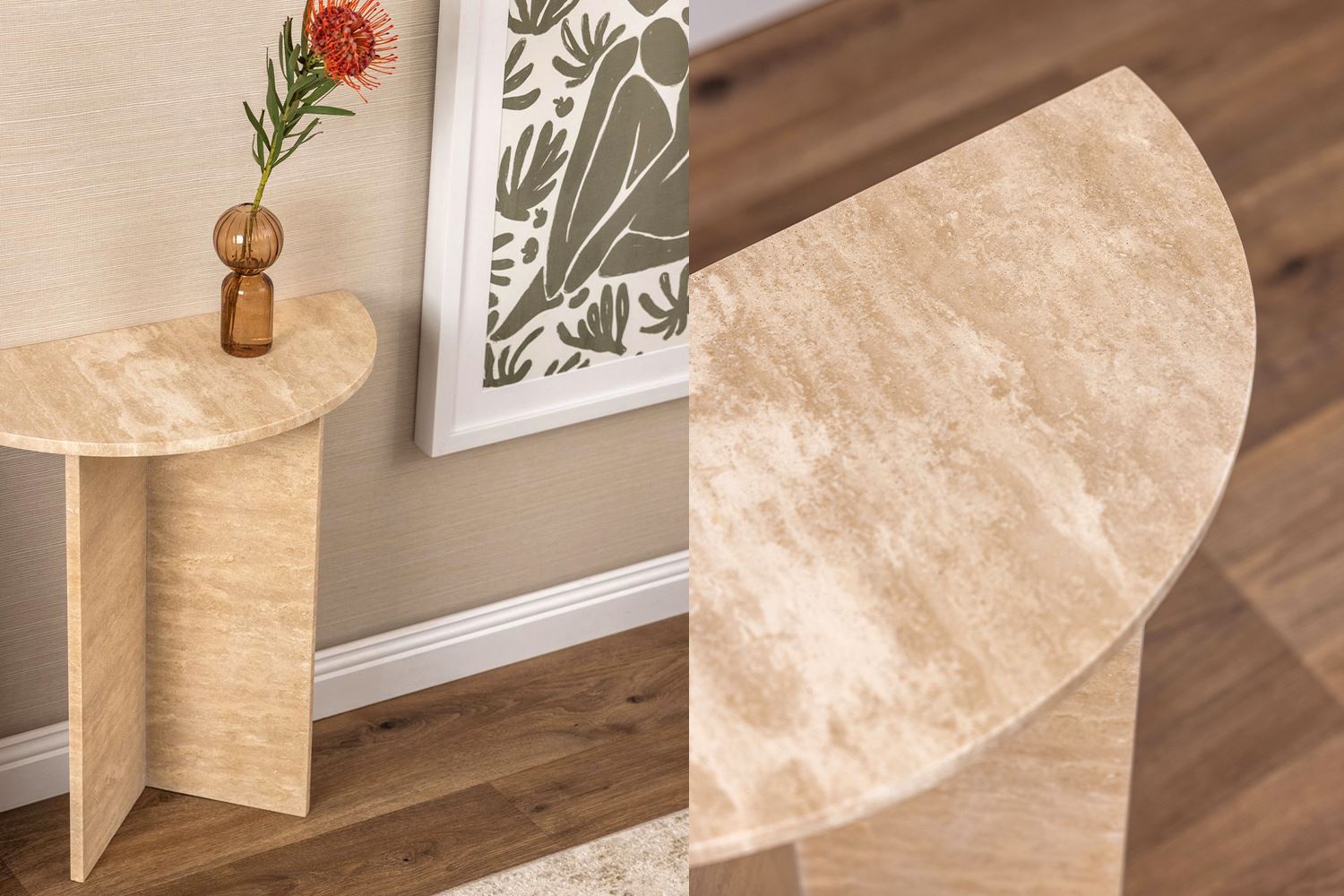
Travertine's origins as a stone that forms naturally outdoors around mineral springs mean it also performs well in covered outdoor or semi-outdoor settings, a covered alfresco table or an undercover entryway console, for instance. It's worth checking the specific finish and sealing of any piece intended for outdoor or semi exposed use, since not every indoor travertine finish is rated the same way for weather exposure.
Building a full room around travertine
If you're working travertine into a whole room scheme rather than a single piece, the easiest sequencing is to start with the largest travertine item you're introducing, a coffee table or console, and choose your wall colour and art second, using the stone's own undertones as the reference point rather than the other way around. This avoids the common mistake of committing to a wall colour first and then discovering it clashes with a stone that has a strong natural undertone of its own.
From there, layer in soft furnishings, a linen or boucle sofa, a jute or wool rug, that echo the same organic, natural material palette. The goal is a room where the travertine feels like one part of a coherent material story rather than a single imported statement piece surrounded by unrelated finishes.
.jpg)
Frequently asked questions
-
Is travertine hard to maintain?
Not particularly. It's more porous than some stones, so using coasters and wiping up spills promptly is worth doing, but it doesn't require any specialist care beyond that for everyday furniture use.
-
What colours go best with travertine?
White and warm cream are the safest base; rust and warm orange brown tones bring out its warmth; deep or peacock blue creates a striking, more dramatic contrast.
-
Is travertine furniture a lasting trend or a passing one?
Its popularity has been building steadily for several years and shows no sign of reversing, largely because it aligns with the broader, longer term shift toward natural materials and texture rather than being tied to a single colour trend.
Where travertine fits against other popular stones
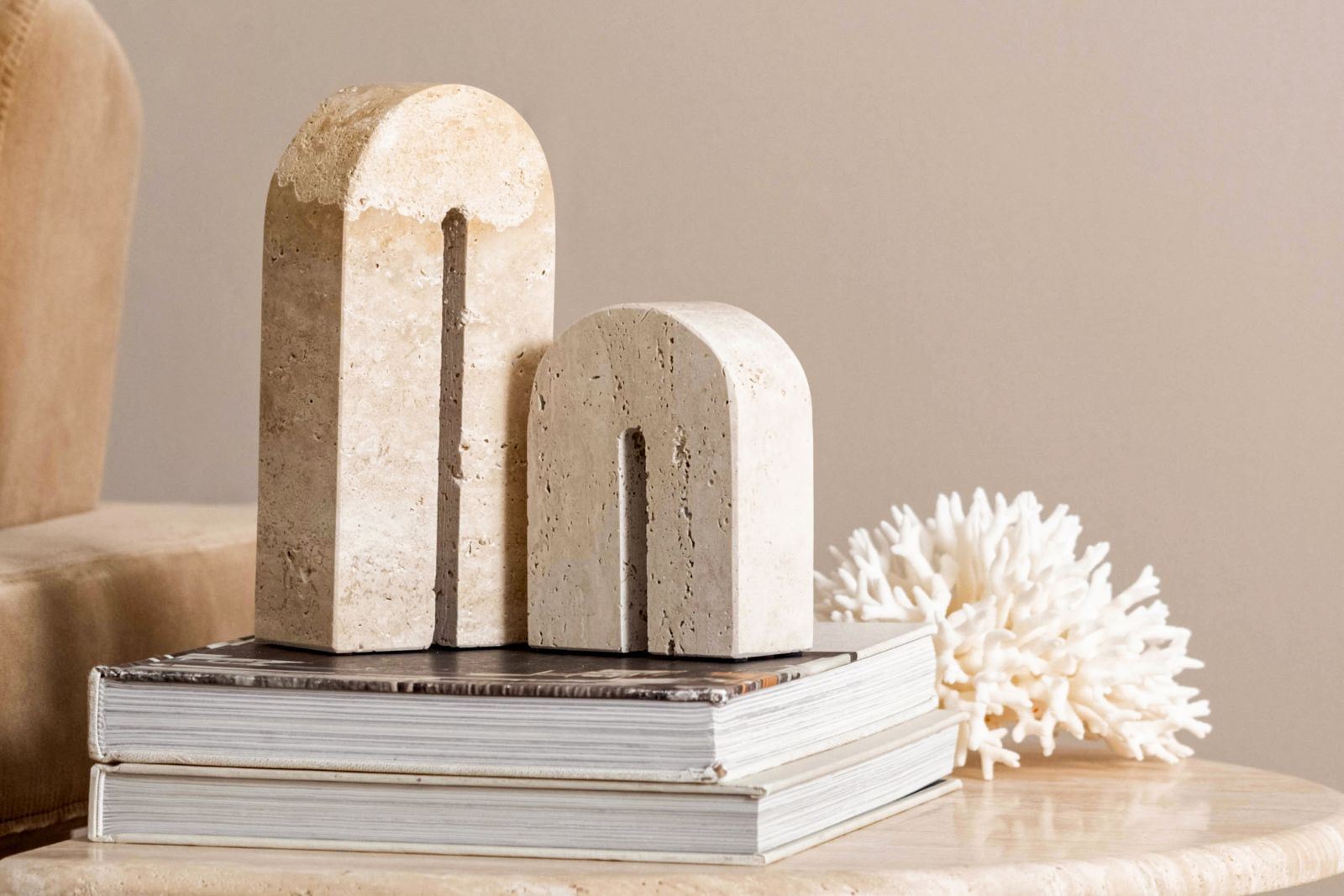
It's worth understanding how travertine compares to the other natural stones showing up in interiors right now, since it's often grouped together with marble and terrazzo without much distinction drawn between them. Marble tends to read as more formal and polished, with a smoother surface and more dramatic veining, which suits a slightly more traditional or luxe styling direction. Terrazzo, with its flecked, speckled surface, leans more playful and contemporary, and tends to suit a bolder, more graphic interior.
Travertine sits between the two in feel: warmer and more textural than marble, but calmer and more organic than terrazzo. That middle ground is a large part of why it pairs so easily with such a wide range of other materials and colour palettes, and why it's proven such a durable choice rather than a passing stone of the moment.


