


If you had to choose the cosiest kind of interior style, which one would you pick?
For us, it's modern country styling. This increasingly popular design aesthetic blends rustic countryside charm with contemporary minimalism, giving you all the warmth of farmhouse living without the clichés.
This guide covers 6 essential styling principles with specific product recommendations for living rooms, bedrooms, and dining spaces, suitable for beginners to intermediate designers.
Much like farmhouse interior style, modern country is all about bringing those rustic countryside vibes while keeping a modern, sleek edge. This is what makes it so versatile for any home—you can easily transform your space with just a few key pieces.
On the other hand, it's no secret that this style can be tricky to pull off. How can you make sure to avoid all those countryside clichés while still capturing that cosy, relaxed feeling?
We're here to help you bring all the contemporary country vibes into your own home without going overboard!
What You'll Learn in This Guide
-
How to choose the perfect neutral and accent color palette for country interiors
-
Which patterns work together without creating visual chaos
-
The best textures and materials for authentic countryside charm
-
Step-by-step guidance for each room in your home
-
Common mistakes to avoid when styling modern country spaces
-
Specific product combinations that work beautifully together
Difficulty Level: Beginner to Intermediate
Budget Range: Moderate to Premium
Best For: Living rooms, bedrooms, dining rooms, open-plan spaces
Style Duration: Timeless (won't date quickly with proper execution)
Modern Country vs. Farmhouse: What's the Difference?
.jpg)
Before we dive in, let's clarify the distinction:
Traditional Farmhouse Style:
-
Heavy on rustic, weathered finishes
-
Often includes barn doors, shiplap, exposed beams
-
Can feel more cluttered with vintage finds
-
Typically uses brighter whites and starker contrasts
Modern Country Style:
-
Refined rustic elements with clean lines
-
Muted, sophisticated neutral palettes
-
More edited and intentional styling
-
Balances organic textures with contemporary simplicity
-
Focus on quality over quantity
Think of modern country as a farmhouse's sophisticated older sibling—same warmth, more restraint.
1. What Colors Work Best for Modern Country Interiors?
At a Glance:
-
Base colors: Beige, cream, ivory, cool browns, soft greys (60% of room)
-
Accent options: Sage green, terracotta, steel blue, mustard, blush pink (30% of room)
-
Contrast colors: Black, charcoal (10% of room)
-
Finish preference: Matte over glossy (avoid high-shine surfaces)
Think neutral when it comes to country styling. It's all about emulating the calm vibes of the countryside: surrounded by nature, breathing fresh air, and embracing the serenity.
Incorporate hues of brown including beige and other cool brown undertones, hues of white including cream and ivory, and even some greys for that added cool touch. These earthy neutrals create the foundation of your space and allow accent colors to shine without overwhelming the peaceful atmosphere.
How to Build Your Color Palette
Step 1: Choose Your Base Neutrals (60% of the room)
These will cover your walls, large furniture pieces, and foundational elements:
-
Beige: Warm and inviting, works in all lighting conditions
-
Cream: Softer than white, adds warmth without yellow undertones
-
Ivory: Slightly warmer than cream, pairs beautifully with wood tones
-
Cool browns: Taupe, greige, or soft khaki for depth
-
Soft greys: Choose warm greys with brown undertones, not cold blue-greys
Step 2: Select One Primary Accent Color (30% of the room)
This appears in upholstery, cushions, larger accessories, and artwork. The secret to modern country styling is choosing muted, subtle tones rather than bright, saturated colors.
Step 3: Add Dark Contrast (10% of the room)
Use black or charcoal in small doses: picture frames, hardware, candleholders, or as a thin line in patterned textiles. This creates depth and prevents the space from feeling washed out.
Your Complete Muted Color Guide
Don't get us wrong, a country color palette isn't boring! The best way to bring it to life is with accent shades. The major thing to remember here is to focus on the undertones of each accent color. Steer clear of bright, loud undertones that distract from the tranquilness of a country interior.
Green Shades for Modern Country:
-
Sage: Soft, greyish-green that feels calming and organic
-
Khaki: Earthy, brownish-green with military inspiration
-
Olive: Deep, muted green with sophisticated depth
-
Pine: Forest-inspired green, darker and moodier
-
Best used in: Cushions, throws, accent walls, artwork, upholstery
-
Pairs with: Cream, beige, terracotta, natural wood tones
Orange & Red Tones:
-
Terracotta: Clay-inspired reddish-brown, feels earthy and warm
-
Honey: Golden-orange with caramel undertones
-
Pumpkin: Deeper orange with brown notes (use sparingly)
-
Rust: Burnt orange with vintage appeal
-
Best used in: Accent cushions, throws, small vessels, artwork details
-
Pairs with: Cream, sage green, warm browns
Blue Shades:
-
Steel blue: Cool, greyish-blue that adds sophistication
-
Denim: Medium blue with casual, lived-in appeal
-
Navy: Deep, classic blue for grounding contrast
-
Best used in: Accent walls (wallpaper), artwork, cushions, throws
-
Pairs with: Cream, beige, mustard, blush pink
Yellow Tones:
-
Mustard: Golden yellow with brown undertones, feels vintage
-
Ochre: Earthy yellow with orange notes
-
Sand: Pale, neutral yellow that barely reads as color
-
Best used in: Candles, small accessories, artwork accents
-
Pairs with: Sage green, steel blue, cream, charcoal
Pink Shades:
-
Blush: Soft, barely-there pink with warmth
-
Salmon: Peachy pink with orange undertones
-
Pastel pink: Light and airy, use in small doses
-
Best used in: Cushions, throws, bedding, subtle wallpaper
-
Pairs with: Sage green, cream, soft grey, natural wood
Perfect Product Combinations by Color Story
For a warm neutral living room (15-25 sqm) with green accents:
-
GOLDEN HOUR GUM TREE ART PRINT – Brings natural landscape imagery in warm, golden tones that anchor the room
-
BONDI NATURAL RUG – Grounds the space with organic jute texture
For a dining or accent space with mustard and terracotta touches:
-
SLEEPY HOLLOW POSTER PRINT – Landscape-inspired art in complementary tones
-
GOOD COMPANY WALLPAPER – Creates feature wall impact (use on one wall only)
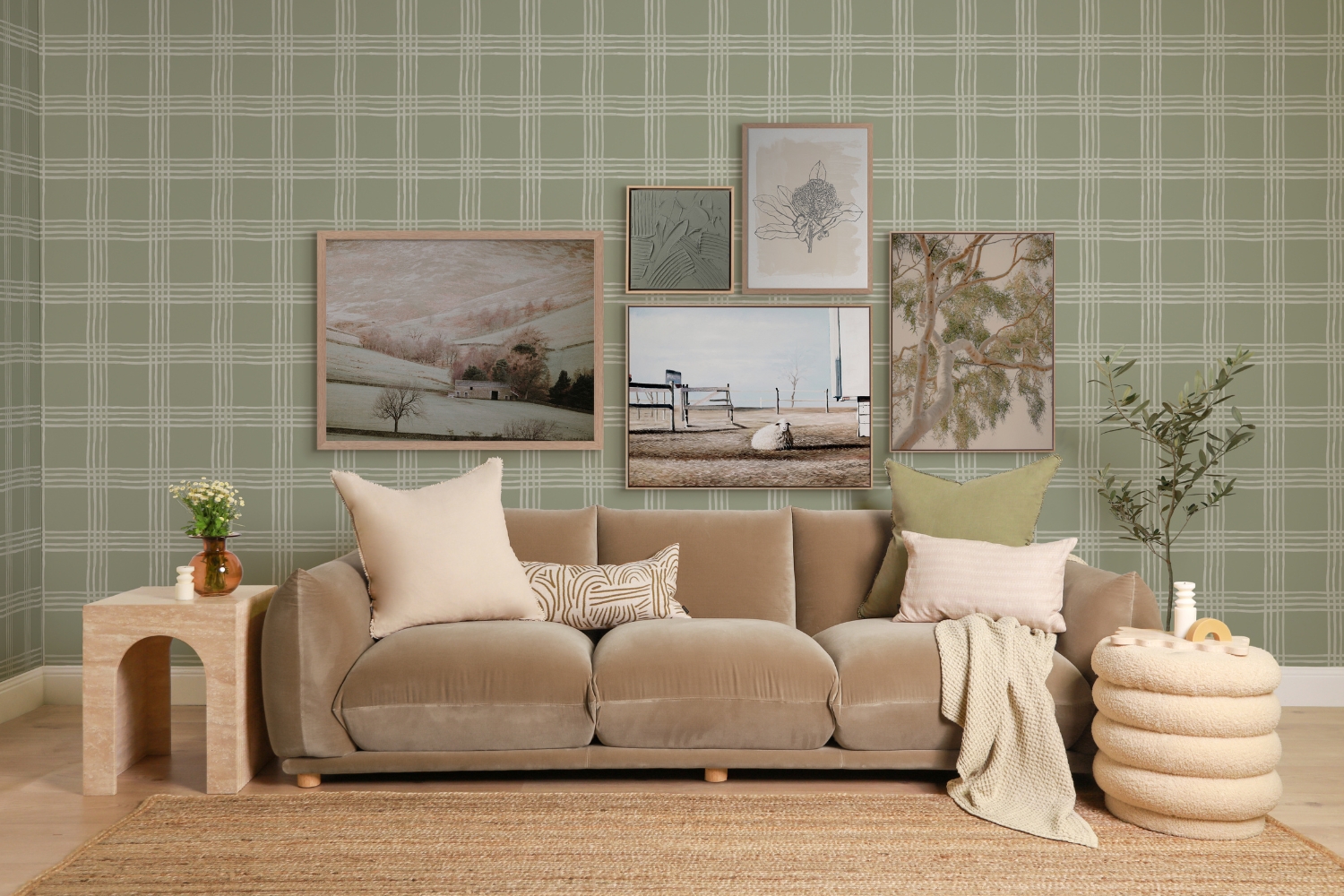
2. How Can Wallpaper Transform a Room Into Country Style?
At a Glance:
-
Best patterns: Gingham, plaid, check, subtle florals
-
Color approach: Neutral base with muted accent colors
-
Application: Feature walls work best (not all four walls)
-
Room size consideration: Works in any size; just adjust scale
This is one of the easiest and fastest ways to transform an entire room into a countryside retreat. Once again, you still want to keep things subtle here, but that doesn't mean you can't choose a print or pattern.
Gingham, plaid, or check prints bring all the country vibes without going overboard. To avoid the stereotypical look, choose neutral, stripped-back shades that don't overpower the entire room. Let accent colors pop in other areas, letting the wallpaper add a subtle, cosy touch to the room.
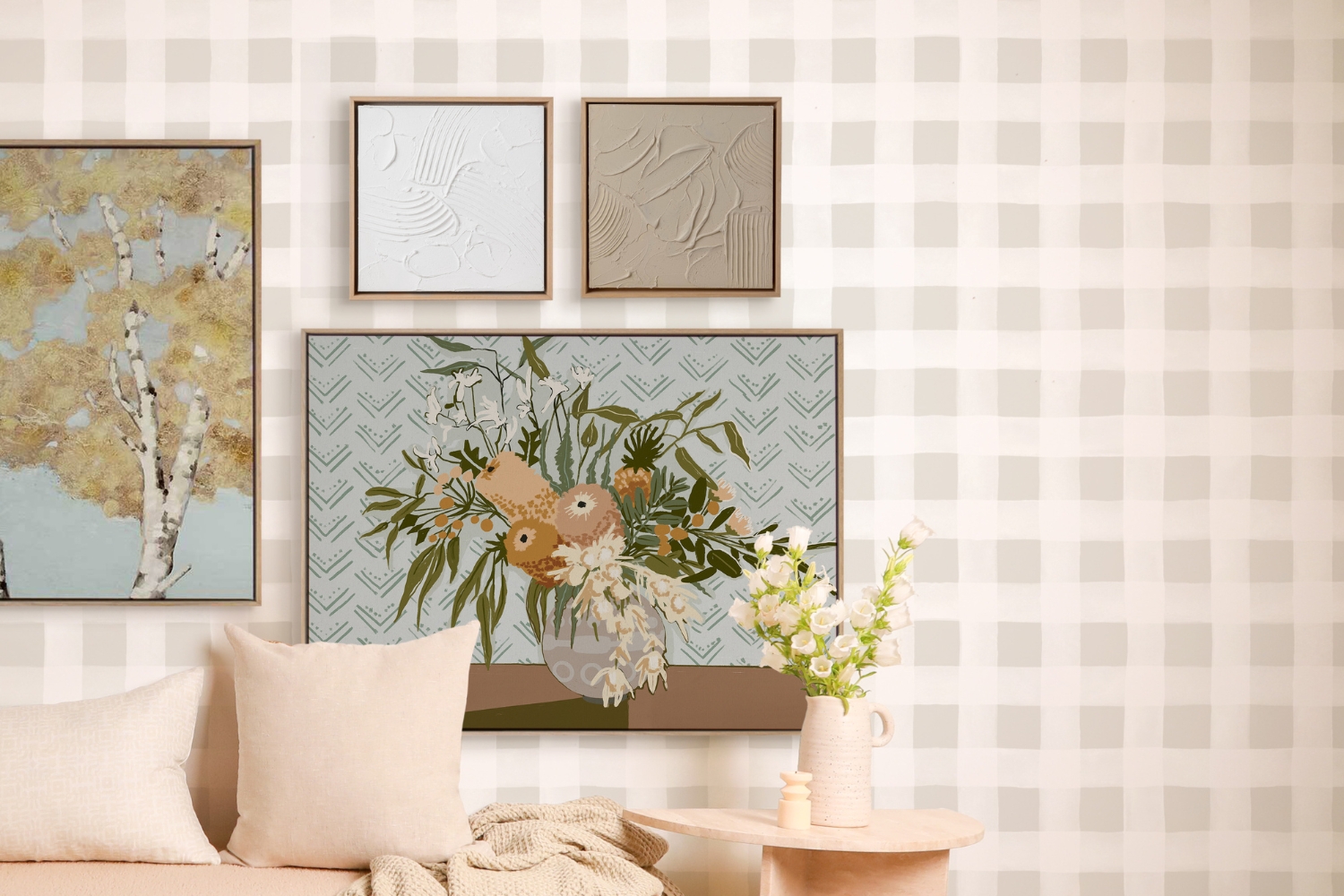
Should I Use Wallpaper or Paint?
-
You want instant visual impact and character
-
You have a feature wall that needs definition
-
Your budget allows (wallpaper costs more upfront)
-
You're comfortable with semi-permanent design choices
-
The room has good natural light (patterns show best with light)
Choose paint if:
-
Working with very small spaces (under 10 sqm)
-
You prefer flexibility to change colors easily
-
You're on a tighter budget
-
The room has architectural features you want to highlight
-
You want a more minimalist backdrop
Can combine both: Wallpaper on one feature wall (behind bed, behind dining table, or on main living room wall) with coordinating paint on remaining three walls. This gives you impact without overwhelming the space.
How to Choose the Right Wallpaper Scale
For small rooms (10-15 sqm): Choose smaller-scale gingham or check patterns (1-3cm squares) to avoid visual overwhelm.
For medium rooms (15-22 sqm): Medium-scale patterns (3-6cm) work beautifully and create impact without dominating.
For large rooms (22+ sqm): You can handle larger-scale patterns or even combine wallpaper on multiple walls.
Step-by-Step: Installing a Country Feature Wall
Step 1: Choose your focal wall, typically the wall behind your main furniture piece (sofa, bed, or dining table).
Step 2: Measure carefully and order 10-15% extra wallpaper to account for pattern matching and mistakes.
Step 3: Select coordinating paint in one of the wallpaper's background colors for remaining walls.
Step 4: Install wallpaper first, then paint other walls to ensure perfect color matching.
Step 5: Style the wall with complementary furniture and accessories that echo (but don't exactly match) the wallpaper colors.
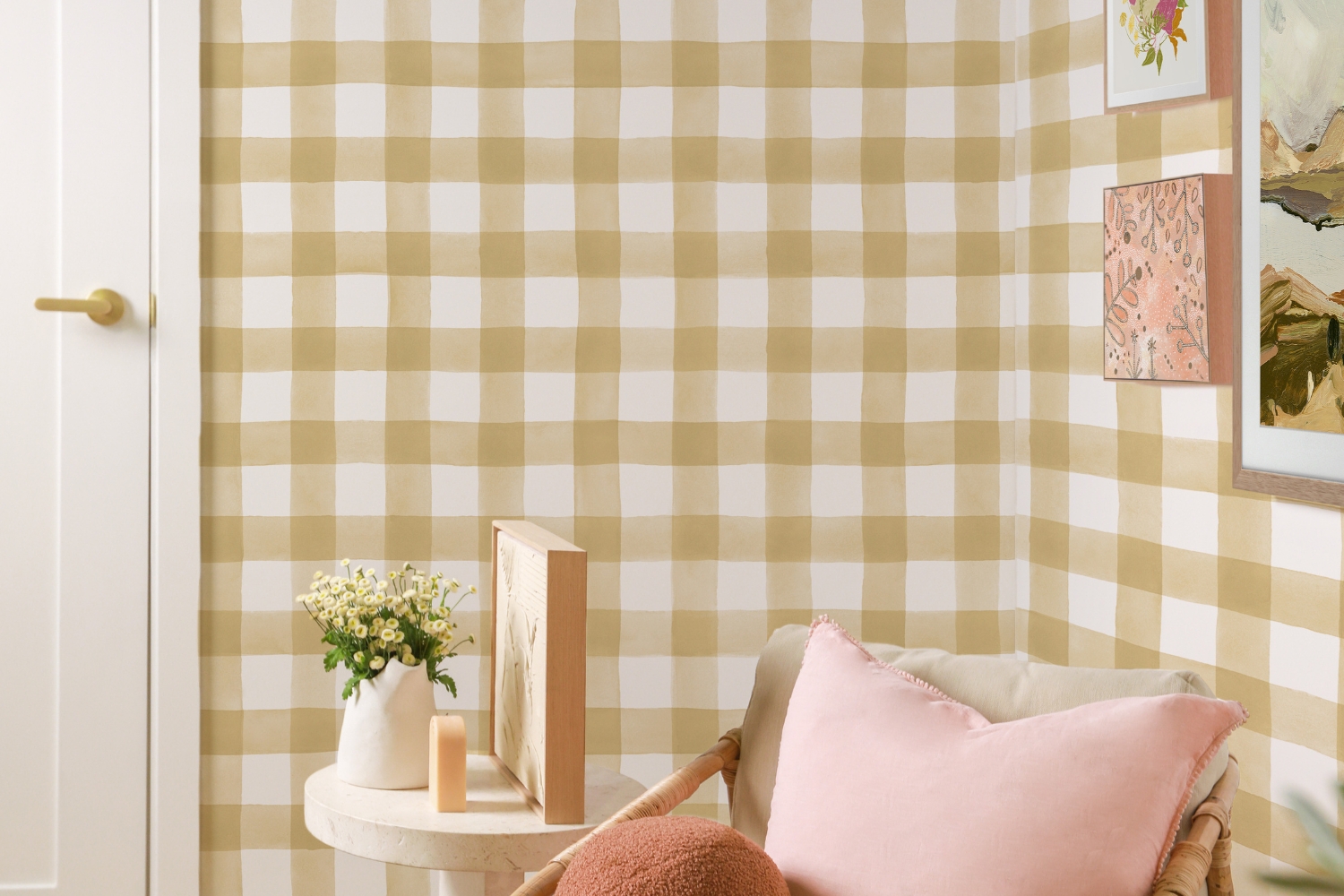
Perfect Product Combinations for Wallpapered Spaces
For a bedroom with gingham wallpaper (12-18 sqm):
-
GINGHAM WALLPAPER – Install on headboard wall only for subtle pattern
-
GINGHAM WITH WHITE STRIPES WALLPAPER – Alternative option if you want more visual interest
-
DHARRABU CANVAS PRINT – Aboriginal-inspired organic patterns
-
GLORY DAYS CANVAS PRINT – Complements natural, neutral aesthetic
Pro tip: When using patterned wallpaper, limit additional patterns in the room to 1-2 more types maximum. Let the wallpaper be your primary pattern statement.
3. What Patterns Can You Mix in Modern Country Design?
At a Glance:
-
Pattern limit: 2-3 different patterns per room
-
Safe combinations: Stripes + checks, florals + checks, geometric + organic
-
Scale variation: Mix one large-scale with one small-scale pattern
-
Color consistency: All patterns should share at least one color
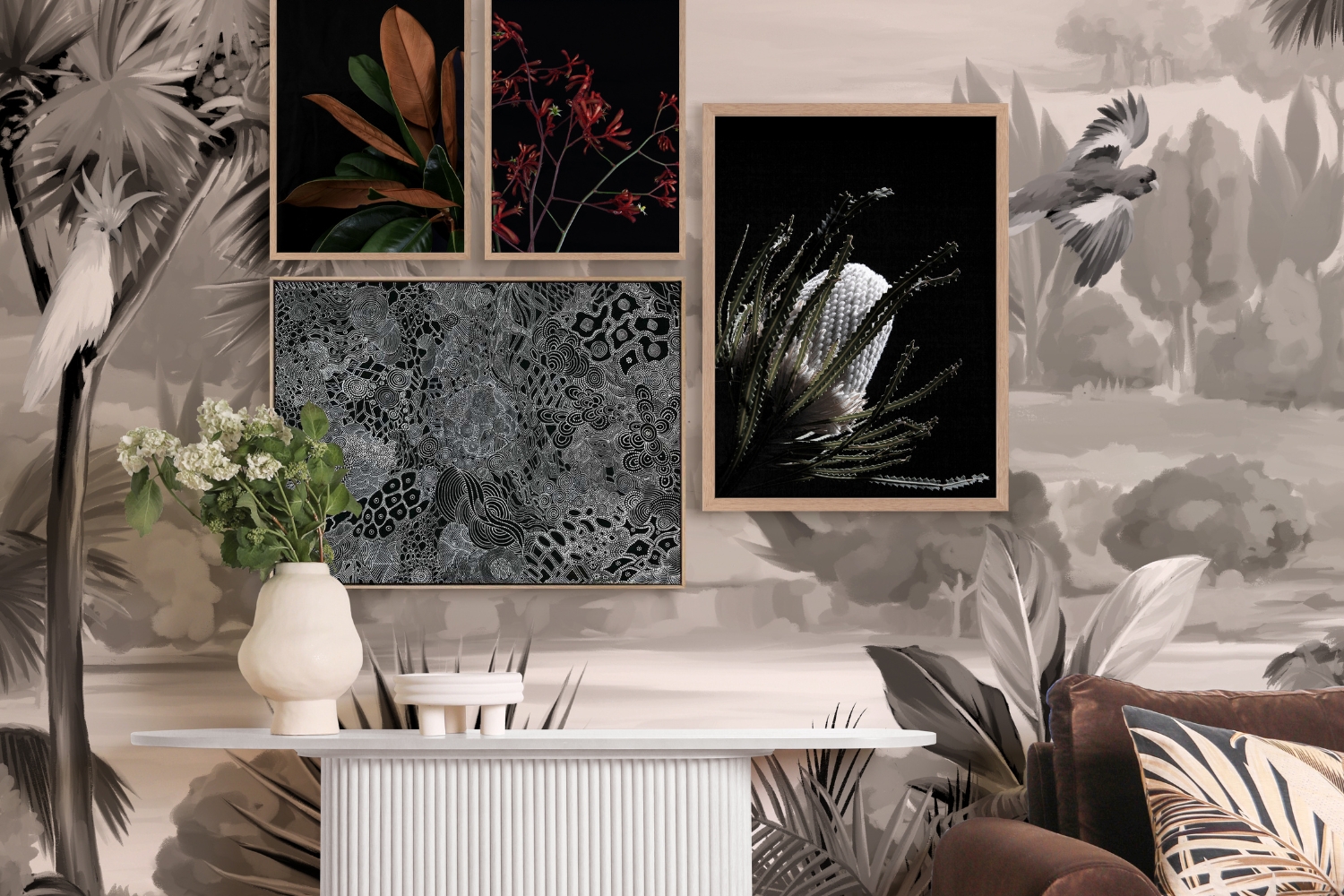
Speaking of plaid and check, pattern mixing is yet another perfect way to inject country energy into your space. Don't be afraid to mix and match different patterns, such as stripes with plaid. This mismatched element enhances the organic, laidback vibe reminiscent of the countryside, where the beauty in nature's "imperfections" is celebrated.
Make a room pop with a funky piece of furniture or a set of mismatched cushions, and tie it all together with a cosy throw or two. The trick here is to maintain that subtle color palette we spoke about earlier, which helps mellow out the overall look, keeping it modern and refined.
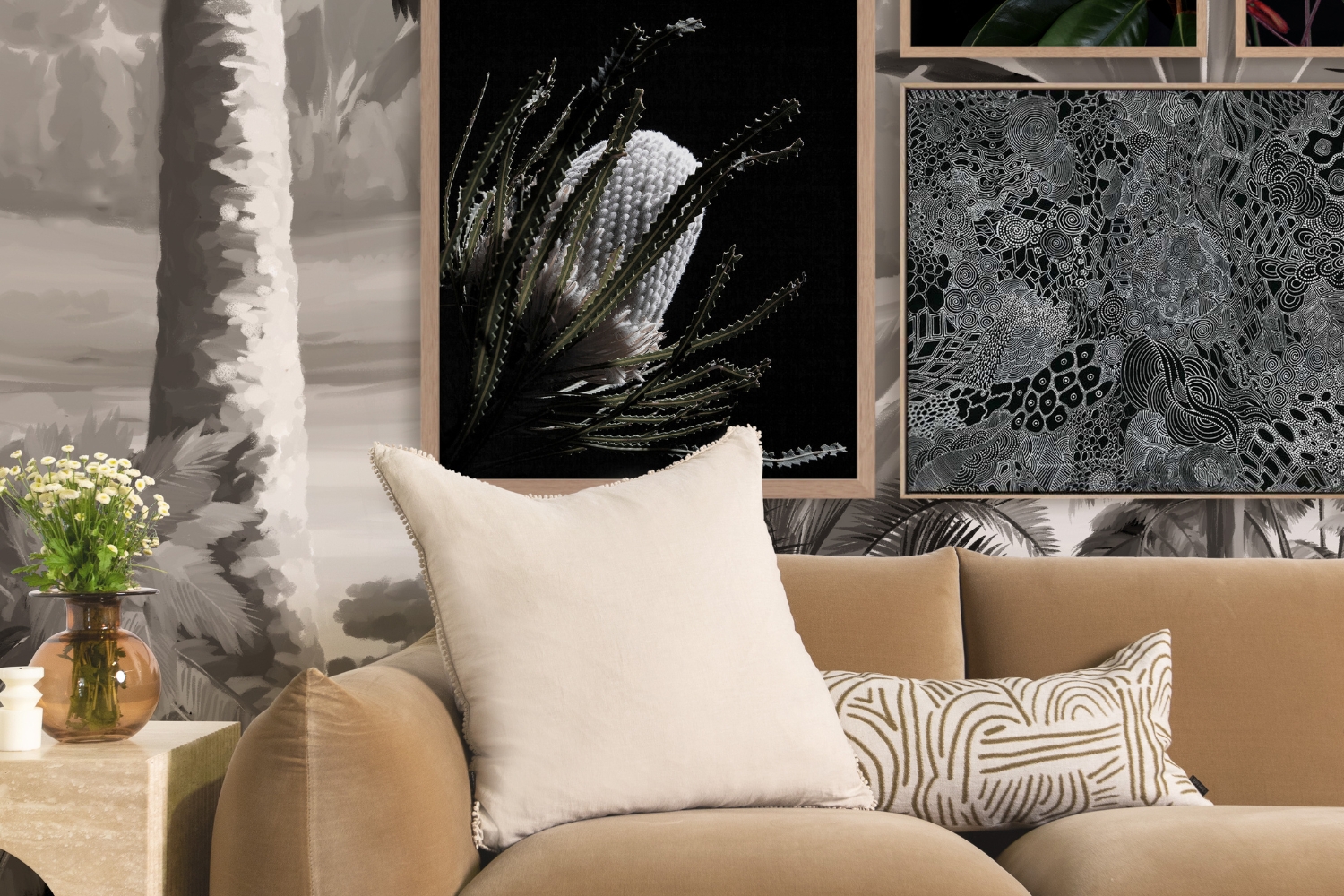
The Pattern Mixing Formula That Always Works
Pattern Type 1: Geometric (40-50% of patterns) This includes checks, gingham, plaid, stripes, and grid patterns. These provide structure and a modern edge.
Pattern Type 2: Organic/Natural (40-50% of patterns) This includes florals, botanical prints, abstract landscapes, and irregular organic shapes. These add softness and countryside charm.
Pattern Type 3: Accent Pattern (10-20% of patterns) This could be dots, small-scale geometrics, or textural patterns. Use sparingly for interest.
Step-by-Step: Mixing Patterns Successfully
Step 1: Start with your largest pattern This should appear on your biggest textile—sofa, curtains, or wallpaper.
Step 2: Choose a medium-scale complementary pattern Use this in cushions or a throw. It should share at least one color with your first pattern.
Step 3: Add a small-scale pattern for detail This appears in smaller cushions, napkins, or decorative accessories.
Step 4: Include solid colors to provide visual rest Between patterns, use solid neutral pieces to prevent overwhelm. Aim for 40-50% solids in the room.
Pattern Combinations That Work
Classic Country Combination:
-
Large-scale check wallpaper + medium striped cushions + small floral throw
Modern Country Combination:
-
Medium gingham upholstery + large abstract botanical art + small dotted accessories
Eclectic Country Combination:
-
Large organic landscape wallpaper + medium check cushions + small striped lumbar pillow
Common Pattern Mixing Mistakes to Avoid
-
Using more than 3 pattern types – This creates visual chaos
-
All patterns at the same scale – Lacks visual hierarchy
-
No shared colors between patterns – Looks disjointed
-
Too many busy patterns – At least 50% of textiles should be solid or subtle
-
Matching patterns exactly – This feels too "matchy" and staged
Perfect Product Combinations for Pattern Mixing
For a living room with mixed patterns (18-25 sqm):
-
CAMPASPE DREAMS WALLPAPER – Your bold geometric pattern statement
-
MINA MINA JUKURPA CANVAS – Adds organic, Aboriginal-inspired pattern
Pro tip: Use the "squint test": stand back and squint at your room. If patterns blur together harmoniously rather than competing for attention, you've succeeded!
4. Which Textures Create an Authentic Country Feel?
At a Glance:
-
Primary textures: Linen, boucle, jute, travertine, rattan
-
Finish preference: Matte, brushed, or textured (avoid glossy)
-
Texture ratio: Mix 3-4 different textures per room
-
Balance: Soft textiles (70%) + hard materials (30%)
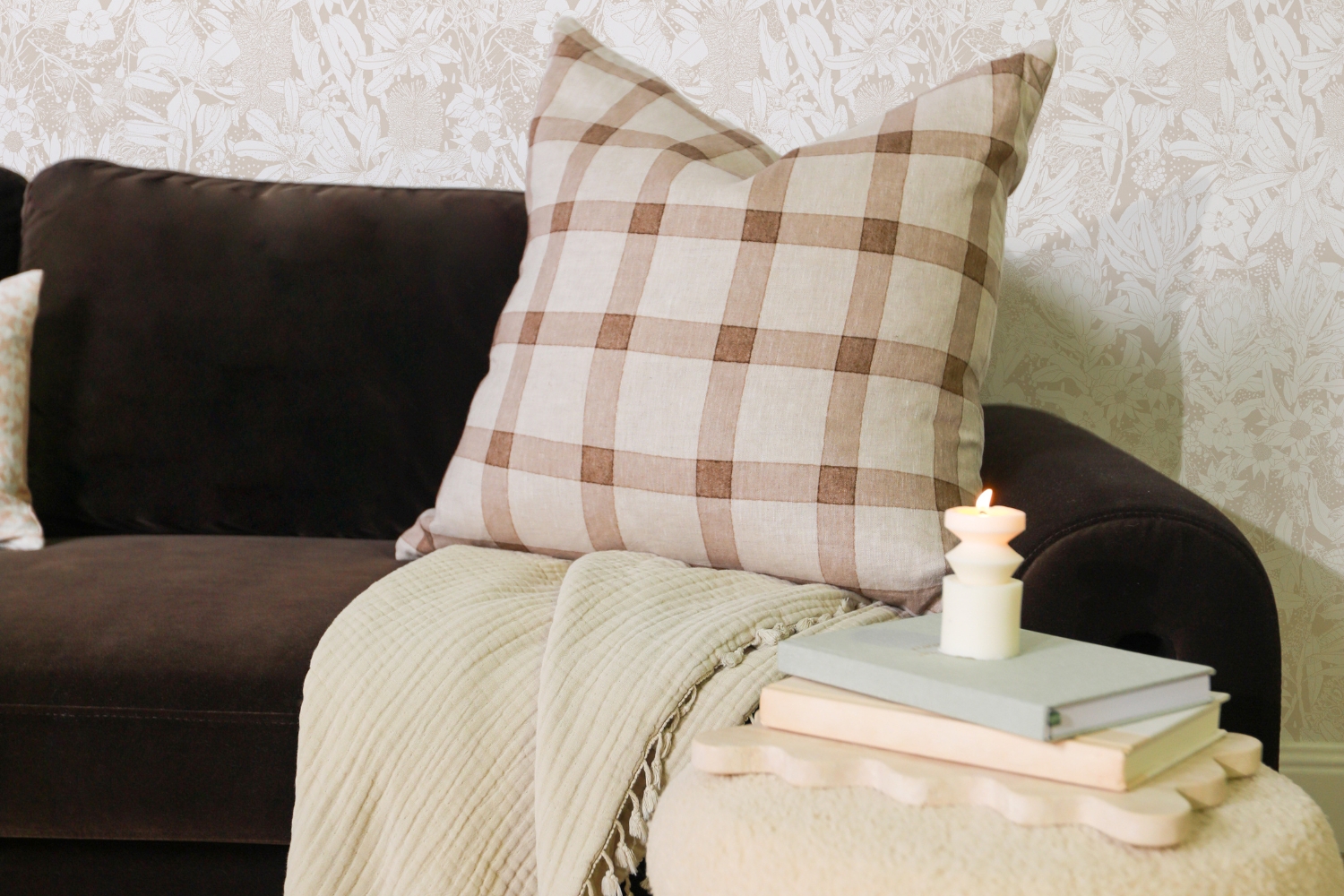
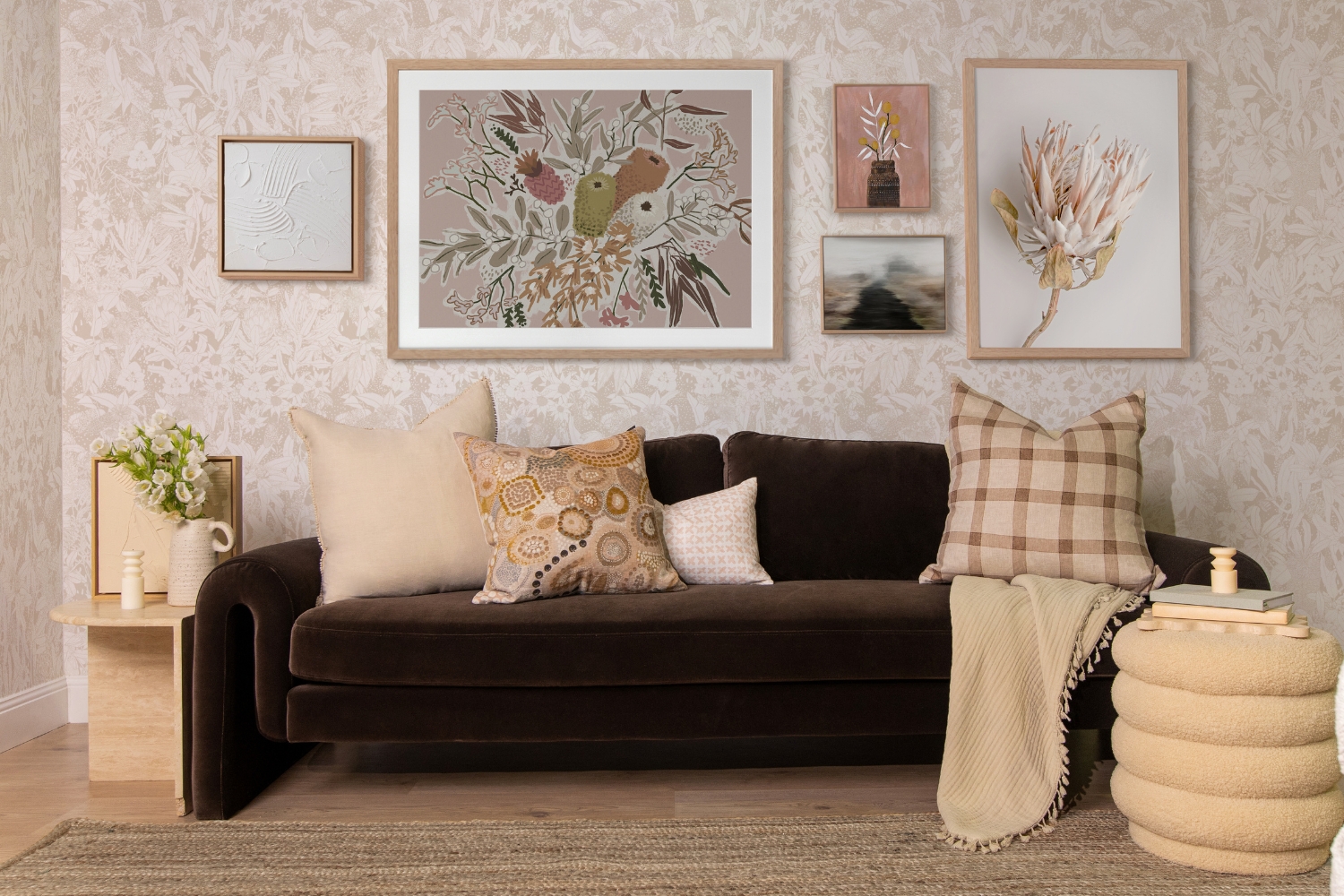
With its strong roots in earthy vibes, a modern country interior benefits from the inclusion of softened textures. This means that even hard materials such as stone should be softened out with a brushed or matte look, lending to the calmness of a countryside home.
Understanding Material Properties
Travertine:
-
What it is: Natural limestone formed by mineral springs
-
Characteristics: Porous surface, warm tones (cream to honey), naturally matte finish, visible pitting and variations
-
Why it works: Organic look and texture that feels earthy yet refined
-
Best used in: Trays, side tables, decorative vessels, coffee table surfaces
-
Care: Requires sealing to prevent staining; wipe spills immediately
-
Pairs with: Linen, boucle, warm wood tones
Travertine is the perfect type of stone to achieve this softened look with its organic appearance and texture, and luckily, it's easy to find the right tones that suit the rest of the desired color palette. Travertine is often quite warm, which pairs beautifully with other countryside elements in the home, and especially with soft linen and boucle textures in throws, cushions, or furniture.
Linen:
-
What it is: Natural fiber from the flax plant
-
Characteristics: Breathable, textured weave, wrinkles easily (considered a feature), softens with use
-
Why it works: Casual, lived-in feel that's essential to country styling
-
Best used in: Cushion covers, throws, curtains, bedding, upholstery
-
Care: Machine washable on gentle cycle; embrace the wrinkles
-
Pairs with: Travertine, boucle, natural wood, rattan
Boucle:
-
What it is: Looped textile with nubby, textured surface
-
Characteristics: Durable, adds visual and tactile interest, slightly retro feel
-
Why it works: Brings softness and dimension without being too precious
-
Best used in: Upholstery (sofas, stools, chairs), cushions, throws
-
Care: Professional cleaning recommended for upholstery; spot clean
-
Pairs with: Smooth surfaces (wood, stone), linen, velvet accents
Velvet (Use Sparingly):
-
What it is: Dense pile fabric with soft, lustrous finish
-
Characteristics: Luxurious feel, catches light beautifully, shows wear patterns
-
Why minimal use: Can feel less organic and too formal in large quantities
-
Best used in: Single cushion, one piece of furniture, or small accent items
-
Care: Professional cleaning recommended; avoid water
-
Pairs with: Linen and boucle (but keep velvet to 20% or less of textiles)
Velvet is also a possibility, but keep it very subtle, as it can feel a little less organic. For example, incorporate a single velvet cushion or furniture piece for some added softness, but leave it at that. Boucle and linen are your two key furniture choices with their soft look and hand feel.
Jute/Sisal/Seagrass:
-
What it is: Natural plant fibers woven into rugs and textiles
-
Characteristics: Coarse texture, natural color variations, durable
-
Why it works: Ultimate organic material that grounds any space
-
Best used in: Area rugs, baskets, wall hangings
-
Care: Vacuum regularly; spot clean only (avoid soaking)
-
Pairs with: Everything—acts as a neutral foundation
Rattan:
-
What it is: Woven palm material used in furniture
-
Characteristics: Lightweight, natural color variations, slightly flexible
-
Why it works: Classic country material with organic, handcrafted appeal
-
Best used in: Chairs, side tables, baskets, light fixtures
-
Care: Dust regularly; wipe with damp cloth
-
Pairs with: Linen cushions, soft throws, natural wood
The Texture Layering Method
Foundation Layer (40%): Natural fiber rug (jute, sisal, or wool in neutral tone)
Furniture Layer (30%): Mix of wood and upholstered pieces (choose boucle or linen for upholstery)
Soft Furnishing Layer (20%): Cushions, throws, curtains (primarily linen with one boucle or velvet accent)
Accent Layer (10%): Hard materials (travertine, ceramic, rattan, stone) in accessories
Step-by-Step: Creating Textural Depth
Step 1: Start with your largest textured element—typically a natural fiber rug.
Step 2: Add upholstered furniture in boucle or linen (choose the opposite of what you'll use in cushions).
Step 3: Layer in soft textiles—if your sofa is boucle, use linen cushions. If your sofa is linen, add one boucle cushion.
Step 4: Introduce hard textured elements like travertine trays or rattan furniture.
Step 5: Finish with throws in complementary textures—look for chunky knits, gauze, or textured weaves.
Perfect Product Combinations by Texture
For a bedroom focused on soft textures (14-18 sqm):
-
BLUSH BLOOM CANVAS – Soft subject matter that doesn't add hard edges
-
TEACUP TOPIARY CANVAS – Whimsical yet subtle botanical art
-
MONOCHROME NATIVES NUDE WALLPAPER – Feature wall with botanical pattern
-
BONDI NATURAL RUG – Jute foundation that grounds the space
Pro tip: Include at least one unexpected texture in each room. If everything is soft linen and boucle, add a rough jute basket. If everything is hard wood and stone, add a chunky knit throw.
5. What Furniture Shapes Work Best for Country Styling?
At a Glance:
-
Shape preference: Simple, clean-lined, slightly rounded edges
-
What to avoid: Overly ornate, ultra-modern geometric, highly angular pieces
-
Material choices: Natural wood, rattan, upholstered in linen or boucle
-
Scale consideration: Slightly oversized, comfortable pieces (not delicate)
Once again, subtlety is key when executing this interior style. Sleek lines and simple shapes work well in country interiors, avoiding overly elaborate designs that can detract from the organic, yet refined look of contemporary country styling.
When you stand back and look at the room, it should feel easy to scan your eyes across, rather than being distracted by a chaotic display of shapes and patterns that work well in other styles, such as eclectic or boho.
The Simple Shapes Principle
What "Simple Shapes" Means:
-
Furniture with clear, straightforward silhouettes
-
Gentle curves rather than sharp angles
-
Minimal ornamentation or decorative details
-
Emphasis on material and texture rather than elaborate form
What "Simple Shapes" Doesn't Mean:
-
Boring or generic furniture
-
Ultra-modern minimalism (too stark for country style)
-
Matchy sets from one manufacturer
-
Sacrificing comfort for aesthetics
Furniture Shape Guidelines by Piece
Sofas and Chairs:
-
Best: Slightly rounded arms, comfortable depth (85-95cm), soft edges
-
Avoid: Angular contemporary shapes, overstuffed English chesterfields, ultra-modern low-profile designs
-
Ideal materials: Linen or boucle upholstery in neutral tones
Tables (Coffee, Side, Dining):
-
Best: Simple rectangular or round shapes, visible wood grain, sturdy proportions
-
Avoid: Glass tops, ultra-thin legs, highly carved details, ornate bases
-
Ideal materials: Natural wood, travertine tops, rattan bases
Storage Pieces (Cabinets, Shelving):
-
Best: Clean-lined, wooden or rattan, open shelving mixed with closed storage
-
Avoid: Heavy carved details, ornate hardware, mirrored surfaces
-
Ideal materials: Natural or painted wood, rattan, woven elements
Seating (Stools, Benches):
-
Best: Round or rectangular, cushioned or upholstered tops, visible wood or rattan legs
-
Avoid: Industrial metal, ultra-contemporary acrylic, ornate carved legs
-
Ideal materials: Boucle cushions, wood bases, rattan frames
.jpg)
Why Rattan Works Perfectly
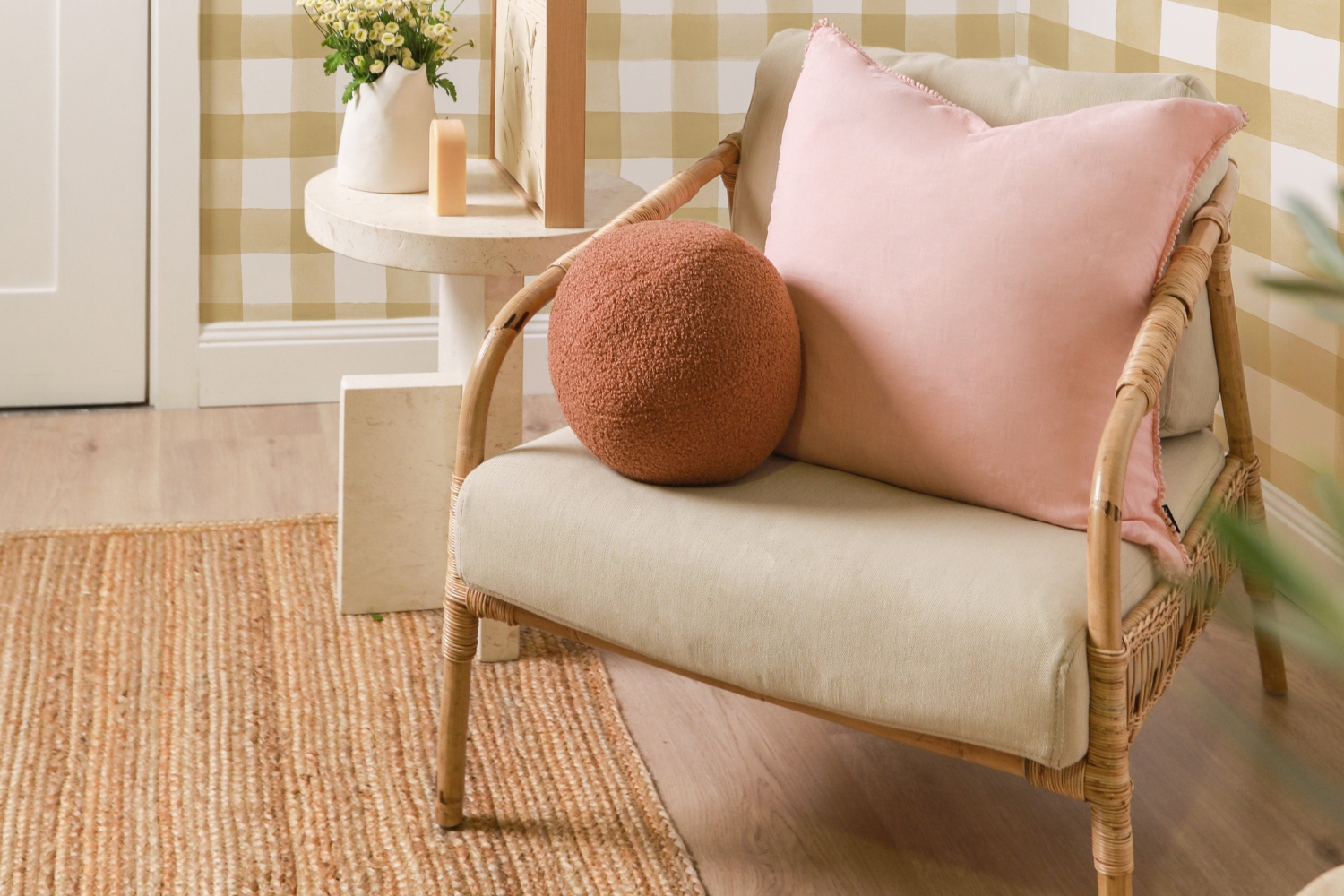
Rattan furniture is ideal for modern country interiors because it brings countryside energy with its organic material while maintaining the clean lines modern styling requires. Here's how to use it:
Rattan Dos:
-
Mix with upholstered pieces (one rattan chair + one boucle sofa)
-
Use in natural finish or subtle painted colors (white, soft grey)
-
Choose pieces with clean weaving and simple shapes
-
Pair with soft cushions in linen or cotton
Rattan Don'ts:
-
Fill entire room with only rattan (too "tropical resort")
-
Choose overly ornate Victorian-style wicker
-
Use glossy stained finishes (keep natural or matte)
Room-by-Room Shape Recommendations
Living Room (15-25 sqm):
-
1 comfortable sofa with gentle curves (not sharp modern angles)
-
1-2 accent chairs (one could be rattan)
-
1 simple rectangular or round coffee table
-
2 side tables with clean lines
-
Open shelving or simple cabinet for storage
Bedroom (12-18 sqm):
-
Simple rectangular bed frame (wood or upholstered)
-
2 matching or complementary bedside tables
-
1 comfortable chair or boucle stool
-
Simple dresser with clean lines
Dining Room (14-20 sqm):
-
Substantial rectangular or round table (natural wood)
-
Mix of seating (upholstered chairs + wooden bench, or all matching)
-
Simple sideboard or buffet for storage
Perfect Product Combinations Emphasizing Simple Shapes
For a versatile living space (16-22 sqm):
-
DHARRABU CANVAS PRINT – Aboriginal-inspired organic patterns
-
GLORY DAYS CANVAS ART PRINT – Landscape in neutral tones
-
GINGHAM MUSTARD WALLPAPER – Pattern on walls so furniture shapes stay simple
Pro tip: If you introduce one unusual shape (like a spherical cushion), keep everything else rectangular, cylindrical, or gently curved. This creates visual interest without chaos.
6. How Do You Choose Art for Country Interiors Without Going Cliché?
At a Glance:
-
Avoid: Obvious farm animals, cowboys, tractors, "Live Laugh Love" signs
-
Choose: Abstract landscapes, botanical studies, muted still lifes, organic abstracts
-
Color approach: Pull from your established palette (neutrals + muted accents)
-
Style preference: Abstract or stylized rather than photorealistic
-
Frame choices: Natural wood, black metal, or simple white frames
Sure, a picture of a horse or cowboy is going to be the "easiest" way to make a space traditionally country, but it's not going to give you that refined, modern look reminiscent of modern country interiors—it risks going too cliché.
Instead, go the subtle route by leaning towards more abstract pieces that include the ideal color palette we mentioned earlier (as well as those accent tones). Even if the artwork resembles something in particular, such as a farm landscape or a still life of flowers, the complementary tones, abstract art style, and overall composition give your room a more sophisticated touch.
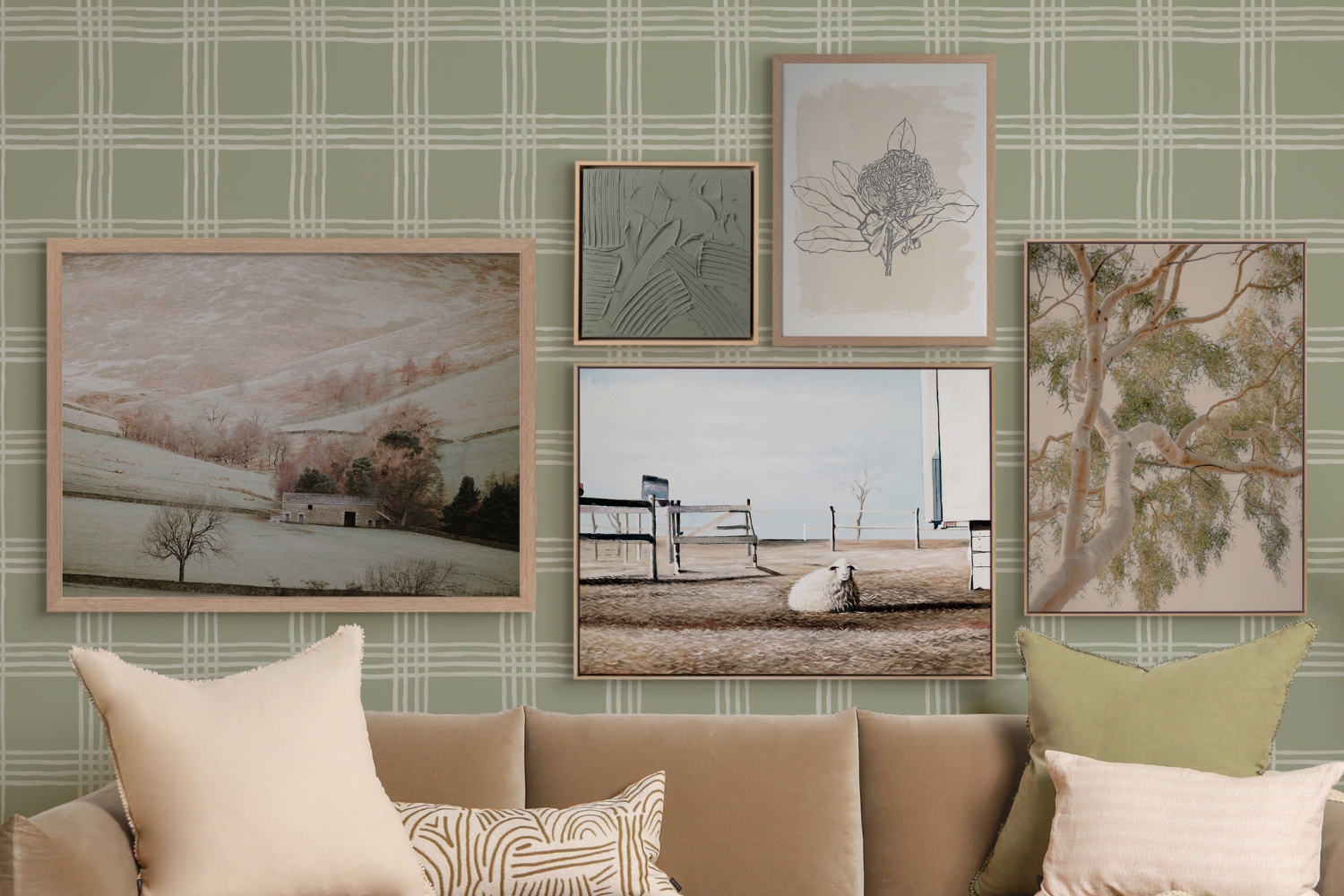
What Makes Artwork "Modern Country"?
Subject Matter That Works:
-
Abstract landscapes: Suggestion of countryside without literal depiction
-
Botanical studies: Individual flowers, leaves, or plants (not busy bouquets)
-
Organic abstracts: Flowing shapes, earthy textures, natural forms
-
Still life: Simple arrangements in muted colors
-
Minimalist nature: Single trees, subtle horizons, soft skies
-
Aboriginal or indigenous art: Organic patterns and earth-toned palettes
-
Architectural studies: Simple buildings, cottages, farmhouses in stylized form
Subject Matter to Avoid:
-
Literal farm animals (unless very stylized or in greyscale)
-
Cowboys, barns, tractors (too obvious)
-
Typography or word art ("Home Sweet Home")
-
Bright, primary-colored landscapes
-
Busy, cluttered compositions
-
Photographic reproductions (go for painted or illustrated styles)
The Sophistication Test
Ask yourself these questions about any artwork you're considering:
-
Would this work in a city apartment? If no, it might be too "country kitsch"
-
Does it rely on obvious symbols? Horses, cowboy hats, or tractors fail this test
-
Are the colors muted and sophisticated? Bright reds, primary blues, or neon greens don't fit
-
Could I see this in an art gallery? You want art that happens to fit country style, not "country-themed" art
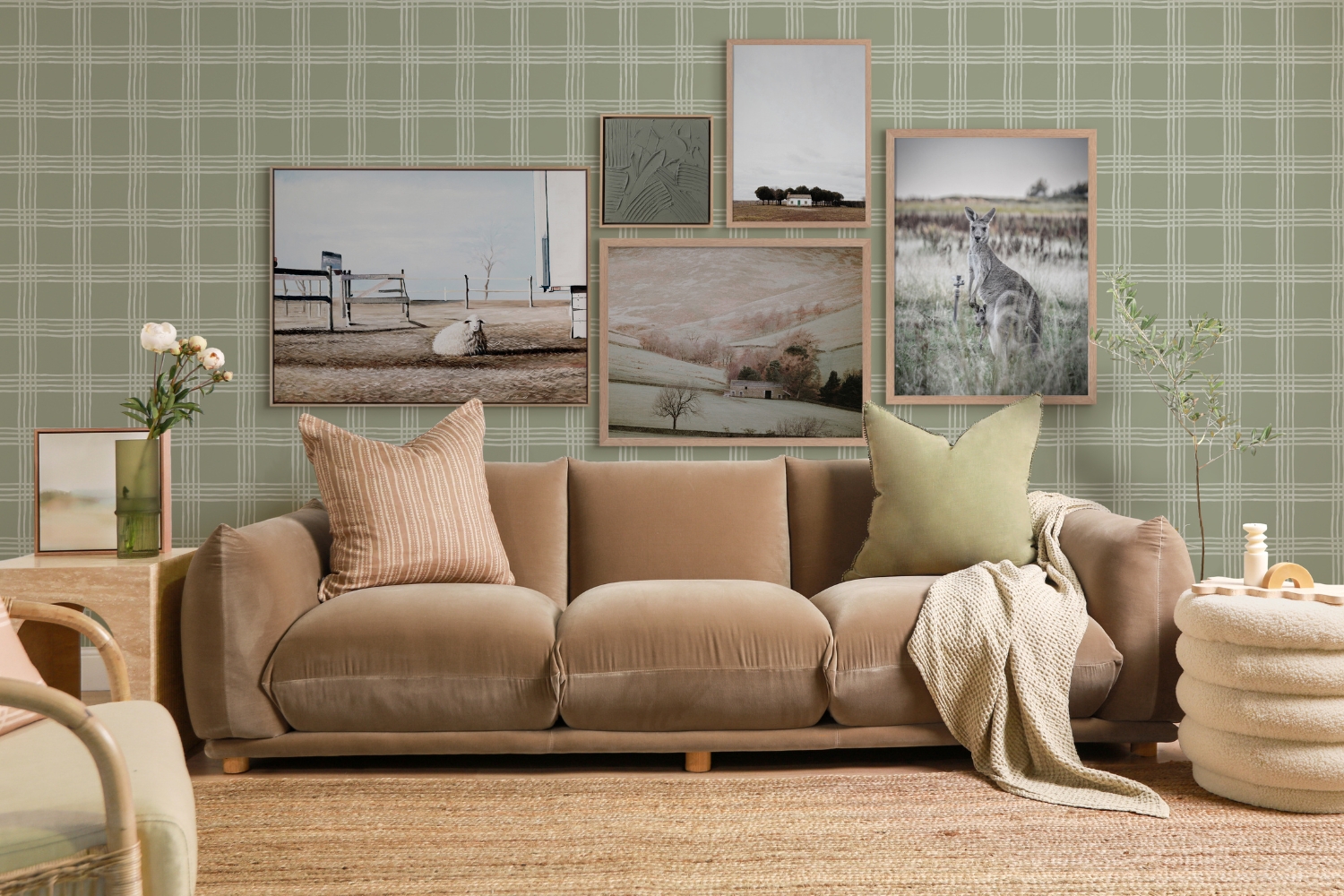
How to Use Farm Animals (If You Must)
We get it! Sometimes you really love that horse portrait or farm animal art. Here's how to include it without going cliché:
The Rules:
-
Choose greyscale or monotone artwork that maintains delicate, muted vibes
-
Limit to one piece per room maximum
-
Select abstract or stylized representations rather than photorealistic
-
Keep it smaller scale (not your largest artwork)
-
Balance with 2-3 abstract pieces in the same room
-
Use sophisticated framing (simple black or natural wood, never ornate gold)
Step-by-Step: Choosing Artwork for Modern Country Spaces
Step 1: Determine your wall space
-
Small wall (under 1.5m): One medium piece (40-60cm) or gallery of 3-4 small pieces
-
Medium wall (1.5-2.5m): One large piece (60-90cm) or gallery of 4-6 mixed pieces
-
Large wall (over 2.5m): One statement piece (90cm+) or extensive gallery wall
Step 2: Choose your primary piece Select artwork that includes at least 2-3 colors from your established palette. This becomes your anchor.
Step 3: Add complementary pieces Choose 1-2 additional artworks that echo colors or themes from your primary piece but vary in size and subject matter.
Step 4: Consider placement
-
Above sofa: Center at 15-20cm above furniture
-
Above bed: Center at 20-30cm above headboard
-
Dining room: Slightly lower (eye-level when seated)
-
Gallery walls: Maintain 5-8cm between frames
Artwork Size Guide by Room
Living Room (15-25 sqm):
-
1 large statement piece (70-100cm) above sofa
-
2 medium pieces (40-60cm) on adjacent walls
-
OR: 1 gallery wall with 5-8 mixed pieces
Bedroom (12-18 sqm):
-
1 medium to large piece (50-80cm) above bed
-
2 small pieces (30-40cm) on side walls
Dining Room (14-20 sqm):
-
1 medium piece (50-70cm) on main wall
-
OR: 2-3 small to medium pieces in a cluster
Perfect Product Combinations for Complementary Artwork
For a curated gallery wall approach (any room):
-
SLEEPY HOLLOW POSTER – Your medium-scale landscape piece
-
COUNTRY'S FINEST ART PRINT – Stylized country scene without cliché
-
HITCH HIKER POSTER – Quirky, unexpected subject that adds personality
-
LITTLE COTTAGE POSTER – Architectural element in muted palette
-
GOLDEN HOUR GUM TREE CANVAS – Your potential statement piece in warm tones
Framing Considerations
Frame Colors That Work:
-
Natural wood: Light oak, walnut, or pine for organic warmth
-
Black: Modern, grounding, works with all colors
-
White: Clean, fresh, best with lighter palettes
-
Avoid: Gold, silver, ornate carved frames
Frame Styles:
-
Simple flat profile (1-3cm wide) for modern look
-
Slight depth (3-5cm) for traditional but clean aesthetic
-
Minimal ornamentation – no carved details or embellishments
Matting:
-
Use when: Artwork is small or you want breathing room
-
Color: Cream or soft white (not bright white)
-
Width: 5-8cm around artwork
At the end of the day, it's important to choose artwork that best reflects your personal style, but for this specific type of interior, avoid brash, bright colors that can mess with the peaceful, soothing vibes. If you do want to incorporate an art piece featuring farm animals, then we suggest choosing a greyscale or monotone artwork that maintains the delicate, muted vibes within the rest of country styling.
Common Mistakes to Avoid in Modern Country Styling
Even experienced decorators can fall into these traps. Here's what to watch out for:
Mistake #1: Too Many Patterns
The Problem: Using 4+ different patterns creates visual chaos
The Fix: Limit to 2-3 pattern types per room, with at least 50% solid textiles
Mistake #2: Going Full Farmhouse
The Problem: Adding shiplap, barn doors, and "Farmhouse" signs
The Fix: Remember—you want country (refined, subtle), not farmhouse (rustic, obvious)
Mistake #3: All Neutral Everything
The Problem: Fear of color leads to boring, flat spaces
The Fix: Add one accent color family (30% of room) for depth and interest
Mistake #4: Matching Furniture Sets
The Problem: Buying coordinated sets looks catalogue-perfect but feels staged
The Fix: Mix different wood tones and furniture styles while keeping the same level of simplicity
Mistake #5: Ignoring Scale
The Problem: Small furniture in large rooms or oversized pieces in small spaces
The Fix: Measure your space and choose appropriately scaled pieces (see room guidelines above)
Mistake #6: Too Much Rattan
The Problem: Filling a room with only rattan = tropical resort, not country
The Fix: Use rattan as accent (1-2 pieces max per room), mix with upholstered and wood pieces
Mistake #7: Bright, Saturated Colors
The Problem: Using primary colors or neon accents disrupts the calm aesthetic
The Fix: Always choose muted, subtle versions (sage not lime green, terracotta not bright orange)
Mistake #8: Skipping Texture
The Problem: All smooth surfaces create a flat, uninteresting space
The Fix: Layer 3-4 different textures per room (see texture section above)
Mistake #9: Cliché Artwork
The Problem: Obvious farm animals, tractors, or "country-themed" décor
The Fix: Choose abstract landscapes, botanical studies, or organic abstracts in your color palette
Mistake #10: Forgetting Function
The Problem: Prioritizing aesthetics over comfort and usability
The Fix: Country style should feel lived-in—choose comfortable, durable pieces
Frequently Asked Questions About Modern Country Styling
What's the typical budget for modern country style?
Budget-Friendly Approach (€1,000-2,500 for main room):
-
Paint instead of wallpaper
-
Mix budget and investment pieces
-
DIY artwork or prints instead of originals
-
Secondhand rattan furniture
-
Focus on one room at a time
Mid-Range Approach (€2,500-6,000 for main room):
-
Quality upholstered furniture
-
Professional wallpaper installation on feature wall
-
Mix of art prints and original pieces
-
New accessories and textiles
-
Layer in quality over time
Premium Approach (€6,000+ for main room):
-
Designer furniture pieces
-
Custom upholstery in premium fabrics
-
Original artwork
-
High-end lighting
-
Professional interior designer consultation
Can modern country work in small apartments?
Absolutely! In fact, the neutral palette and simple shapes make it perfect for smaller spaces. Here's how to adapt:
For spaces under 50 sqm:
-
Use lighter neutrals (cream, white, soft grey) as your base
-
Limit patterns to 1-2 types
-
Choose furniture with visible legs (creates sense of space)
-
Use one feature wall instead of multiple
-
Edit accessories ruthlessly (quality over quantity)
-
Stick to round or rectangular shapes (avoid spherical accents)
How do I prevent modern country from feeling dated?
Future-Proof Strategies:
-
Focus on quality neutrals (these never go out of style)
-
Avoid trendy accent colors (millennial pink, specific blues)
-
Choose classic patterns (gingham, check, stripes) over momentary trends
-
Invest in timeless furniture shapes
-
Update with small accessories rather than major pieces
-
Skip anything labeled "shabby chic" or "farmhouse"
What's the difference between modern country and cottagecore?
Modern Country:
-
Refined and edited
-
Muted, sophisticated palette
-
Clean lines with organic elements
-
Works in any home type
-
Focuses on quality and restraint
Cottagecore:
-
More whimsical and romanticized
-
Often includes florals and pastels
-
Vintage and found objects
-
Best in actual cottages or rural homes
-
Embraces abundance and clutter
How many accent colors can I use?
The Safest Approach: Choose ONE primary accent color (30% of room) plus BLACK for contrast (10% of room).
For More Experienced Decorators: You can use TWO complementary accent colors (15% each) plus BLACK (10%), but they must share similar undertones (both warm or both cool).
Example Safe Palette: Base: Cream, beige (60%) + Accent: Sage green (30%) + Contrast: Black (10%)
Example Advanced Palette: Base: Cream, taupe (60%) + Accents: Sage green (15%) + Terracotta (15%) + Contrast: Black (10%)
Is modern country style kid-friendly and pet-friendly?
Yes! In fact, it's one of the more practical styles:
Kid-Friendly Features:
-
Neutral bases hide dirt and stains
-
Natural materials are durable
-
Comfortable, relaxed furniture
-
Washable linen fabrics (embrace the wrinkles!)
Pet-Friendly Features:
-
Performance fabrics available in boucle and linen
-
Natural fiber rugs are affordable to replace
-
Simple shapes = fewer places for fur to collect
-
Muted colors hide pet hair better
What to Choose:
-
Outdoor-rated fabrics for heavily used pieces
-
Darker neutrals (taupe, khaki) over cream if you have pets
-
Washable cushion covers
-
Avoid delicate velvets in high-traffic areas
Can I mix modern country with other styles?
Yes! Modern country pairs beautifully with several styles:
Modern Country + Scandinavian:
-
Emphasize lighter neutrals (white, soft grey)
-
Add clean-lined wood furniture
-
Include plenty of negative space
-
Keep patterns minimal
Modern Country + Bohemian:
-
Increase pattern variety (but keep colors muted)
-
Add more textiles and layering
-
Include vintage or handcrafted pieces
-
Embrace imperfection
Modern Country + Japandi:
-
Focus on natural materials and textures
-
Choose low-profile furniture
-
Emphasize negative space and minimalism
-
Use organic shapes
Don't Mix With:
-
Industrial (too harsh)
-
Ultra-modern (too stark)
-
Maximalist (too busy)
-
Art Deco (too glamorous)
How do I transition my current style to modern country?
Start Small:
-
Paint walls in neutral (cream, beige, soft grey)
-
Add 2-3 cushions in linen with muted accent colors
-
Swap one art piece for abstract landscape or botanical print
-
Add natural fiber rug
-
Introduce one piece of rattan furniture
Medium Changes:
-
Reupholster existing sofa in linen or boucle
-
Install wallpaper on one feature wall
-
Replace curtains with linen panels
-
Swap all cushions and throws
-
Update lighting fixtures
Full Transformation:
-
Paint or wallpaper entire room
-
Replace major furniture pieces
-
Complete artwork overhaul
-
New window treatments
-
Update flooring if budget allows
How long does a room transformation typically take?
DIY Approach:
-
Painting: 1 weekend
-
Wallpapering feature wall: 1-2 days
-
Furniture shopping: 2-4 weeks
-
Artwork selection: 1-3 weeks
-
Total: 4-8 weeks for complete transformation
Professional Approach:
-
Designer consultation: 1-2 weeks
-
Ordering custom pieces: 6-12 weeks
-
Installation: 1-2 weeks
-
Total: 8-15 weeks for complete transformation
Your Modern Country Transformation Checklist
Ready to bring modern country style into your home? Use this checklist to ensure you've covered all the essentials:
Color & Paint
□ Choose base neutral (beige, cream, ivory, or soft grey) for 60% of room
□ Select one primary accent color in muted tone for 30% of room
□ Add black or charcoal for 10% contrast
□ Paint walls or plan wallpaper for feature wall
□ Ensure all colors have muted, subtle undertones
Pattern & Wallpaper
□ Limit patterns to 2-3 types per room
□ Choose gingham, check, plaid, or subtle botanical patterns
□ Ensure all patterns share at least one color
□ Mix one large-scale with one small-scale pattern
□ Plan wallpaper for feature wall (not all walls)
Texture & Materials
□ Include at least one natural fiber rug (jute, sisal, or wool)
□ Add linen textiles (cushions, throws, or curtains)
□ Incorporate boucle in upholstery or cushions
□ Include one travertine or stone accent piece
□ Add rattan furniture (1-2 pieces maximum)
□ Layer 3-4 different textures throughout room
Furniture & Shapes
□ Choose simple, clean-lined furniture pieces
□ Avoid ornate or ultra-modern geometric furniture
□ Select appropriately scaled pieces for room size
□ Mix upholstered pieces with wood and rattan
□ Ensure furniture has matte or natural finishes
□ Include comfortable, lived-in seating
Artwork & Accessories
□ Choose abstract landscapes or botanical studies
□ Avoid cliché farm animals or country symbols
□ Ensure artwork reflects chosen color palette
□ Select simple frames (natural wood, black, or white)
□ Plan gallery wall or statement piece placement
□ Include 2-3 art pieces per room minimum
Final Touches
□ Add candles or vessels in accent colors
□ Include throws in complementary textures
□ Layer cushions (mix solid and patterned)
□ Add living plants or dried botanicals
□ Include books or organic accessories
□ Ensure 40-50% of items are solid/neutral for visual rest
Room-Specific Shopping Guides
Living Room Essentials (15-25 sqm)
Furniture:
-
1 sofa in linen or boucle (hazelnut, chocolate, or cream)
-
1-2 accent chairs (one could be rattan)
-
1 coffee table (wood or travertine top)
-
2 side tables
-
1 storage piece (cabinet or shelving)
Textiles:
-
1 natural fiber rug (jute or wool)
-
4-6 cushions (mix solid and 1-2 patterns)
-
2 throws in complementary textures
Artwork & Accessories:
-
2-3 art pieces (one statement, two medium)
-
3-5 candles or vessels
-
1-2 trays (travertine or wood)
Estimated Investment:
-
Budget: €1,500-3,000
-
Mid-range: €3,000-7,000
-
Premium: €7,000+
Bedroom Essentials (12-18 sqm)
Furniture:
-
1 bed frame (wood or upholstered)
-
2 bedside tables
-
1 dresser or storage piece
-
1 accent chair or stool (optional)
Textiles:
-
1 bedding set in linen or cotton
-
4-6 cushions (decorative)
-
1-2 throws
-
1 area rug (if not carpeted)
Artwork & Accessories:
-
1-2 art pieces
-
2-4 candles
-
1 tray for styling
Estimated Investment:
-
Budget: €1,000-2,500
-
Mid-range: €2,500-5,000
-
Premium: €5,000+
Dining Room Essentials (14-20 sqm)
Furniture:
-
1 dining table (wood)
-
4-8 dining chairs (mix upholstered and wood)
-
1 sideboard or buffet
Textiles:
-
1 area rug (if space allows)
-
4-8 linen napkins
-
Table runner (optional)
Artwork & Accessories:
-
1-2 art pieces
-
1 centerpiece (vessel or tray)
-
2-4 candles
Estimated Investment:
-
Budget: €1,200-2,800
-
Mid-range: €2,800-6,000
-
Premium: €6,000+
Seasonal Adaptability: Modern Country Year-Round
One of the best things about modern country style is how easily it adapts to seasons without major changes. Here's how to refresh your space throughout the year:
Spring/Summer (March-August)
Color Adjustments:
-
Emphasize lighter neutrals (cream, white, soft beige)
-
Add more green accents (sage, khaki)
-
Include fresh white in textiles
Textile Changes:
-
Switch to lighter-weight linen
-
Remove heavy throws or store them
-
Add gauze or lightweight cotton cushions
-
Use sheers or lighter curtains
Accessories:
-
Fresh or dried flowers in simple vessels
-
Lighter candle scents (citrus, herbs)
-
Open windows, embrace natural light
Fall/Winter (September-February)
Color Adjustments:
-
Layer in deeper neutrals (taupe, warm brown)
-
Add more terracotta and rust accents
-
Include touches of mustard or warm orange
Textile Changes:
-
Add chunky knit throws
-
Switch to heavier linen or boucle cushions
-
Layer rugs (smaller rug over larger)
-
Use heavier curtain panels
Accessories:
-
Dried botanicals and seed pods
-
Warmer candle scents (vanilla, wood, spice)
-
Layer lighting (add table lamps)
Pro tip: Keep your foundational pieces (furniture, art, rugs) neutral and permanent, then swap seasonal textiles and small accessories. This allows your space to feel fresh without expensive overhauls.
Your 8-Week Modern Country Transformation Plan
Feeling overwhelmed? This week-by-week plan helps you tackle the transformation in manageable steps:
Week 1: Planning & Inspiration
-
Measure your space and create floor plan
-
Create mood board with color palette
-
Set budget and prioritize purchases
-
Order paint samples or wallpaper samples
Week 2: Paint & Wallpaper
-
Paint walls in chosen neutral (or hire painter)
-
Install wallpaper on feature wall (or hire installer)
-
Allow proper drying time
Week 3: Major Furniture Orders
-
Order sofa, chairs, or largest furniture pieces
-
Order area rug
-
Place artwork orders
-
Note: Lead times can be 4-12 weeks
Week 4: Side Tables & Storage
-
Shop for side tables, coffee table
-
Order storage solutions
-
Purchase or order lighting
Week 5: Textiles Shopping
-
Choose and order cushions
-
Select throws and bedding
-
Order curtains or window treatments
Week 6: Artwork & Accessories
-
Select and frame artwork
-
Shop for candles, vessels, trays
-
Purchase any remaining decorative items
Week 7: Furniture Arrival & Placement
-
Receive and place major furniture
-
Arrange rug and main seating
-
Hang curtains or window treatments
Week 8: Styling & Finishing
-
Hang artwork at proper heights
-
Style surfaces with accessories
-
Add cushions and throws
-
Fine-tune lighting
-
Step back and assess, and then make final adjustments
Total Timeline: 8-12 weeks for complete transformation (longer if custom furniture involved)
Final Thoughts: Make It Your Own
The countryside is like a breath of fresh air, a place of comfort, and a warm hug. That's exactly what your home should feel like—and modern country styling helps you achieve that welcoming, peaceful atmosphere.
Remember, these guidelines aren't rigid rules. Interior design is about creating a space that feels authentically yours. Some people will lean heavier into neutrals, others will embrace more patterns. Some will collect more artwork, others will keep walls minimal. All of these approaches can work beautifully within modern country style.
The key principles to always remember:
-
Keep your palette muted and sophisticated
-
Balance patterns with plenty of solids
-
Layer textures for depth and interest
-
Choose simple shapes over ornate designs
-
Select artwork that's subtle rather than obvious
-
Create a space that feels comfortable and lived-in
Start small, build your collection gradually, and most importantly—choose pieces you genuinely love. Your home should tell your story, not follow a template.
Ready to create your countryside retreat?
Shop on-trend art prints, fine art, and premium home accessories today.
You might be interested in the latest episode of Country Home Rescue:
COUNTRY HOME RESCUE- WEEK 02