
 Skip to content


What Makes Mexican Art Unique?
What makes Mexican art unique? Why do so many people love it? Mexican art is a vibrant world made up of layers of rich history and effervescent culture, and it is an endless well of creativity. Beyond all those gorgeous, bright and bold colours, Mexican-inspired artworks are loved for their expressive storytelling and joyful spirit.
There are many different types of Mexican art, but its trademarks are what make it so distinctive: vibrant colour, intricate detail and cultural symbols. You will often find a narrative interwoven with each brushstroke, a story that captivates art lovers everywhere. It is where ancient traditions meet a contemporary approach, resulting in work that feels both deeply personal and impactful.
In this guide we look at what Mexican art is known for, its history, the symbolism behind its most common motifs, why it is so colourful, and the traditional and contemporary styles that define it.
What Is Mexican Art Known For?
Mexican art is known above all for four things:
- Bold, saturated colour, used as a statement of identity and a celebration of Mexico's cultural richness.
- Symbolic imagery, from mariachi musicians and marigolds to sugar skulls and cacti, each carrying its own meaning.
- Storytelling, with a narrative quality that turns everyday scenes into something worth lingering over.
- Folk art traditions, the handmade regional crafts, patterns and techniques passed down through generations.
Together, these elements create a visual language that is unmistakably Mexican, whether you are looking at a centuries-old mural or a contemporary print.
.png)
A Rich History of Mexican Art
At the heart of what makes Mexican art unique is its ability to embody the spirit of Mexico's diverse heritage. Mexican art is rooted in thousands of years of indigenous tradition, blended with Spanish colonial influences, and every layer of that history contributes to the richness of its art.
Art from Mexico often has a narrative quality to it, as if a story is being told in each painting. That could be anything from a bowl of fruit sitting on a table at a family dinner, to mariachi men seated at a bar having a break between sets.
You will probably be familiar with this narrative quality if you have seen works by famous Mexican artists such as Diego Rivera, Frida Kahlo and David Alfaro Siqueiros, who elevated Mexican art on the world stage. Frida Kahlo in particular is celebrated for her interpretation of Mexican and indigenous culture, as well as the female form.
Celebrations are part of that history too. The Day of the Dead (Día de los Muertos), with its sugar skulls and marigold flowers, not only appears in traditional celebrations but is also echoed in modern artistic expressions, bridging the gap between the past and the present.
.png)
Mexican Symbolism: Common Symbols and What They Mean
Mexican pieces are often filled with symbols that tell stories, and learning to read them is half the joy. Here are the motifs you will see most often, and what they mean.
Mariachi musicians
Mariachi men, often depicted in traditional attire with their instruments, are an iconic symbol in Mexican art. These figures are not just musicians. They are symbols of cultural pride and joy, representing a rich musical tradition that is integral to celebrations and gatherings in Mexico.
Exotic fruits
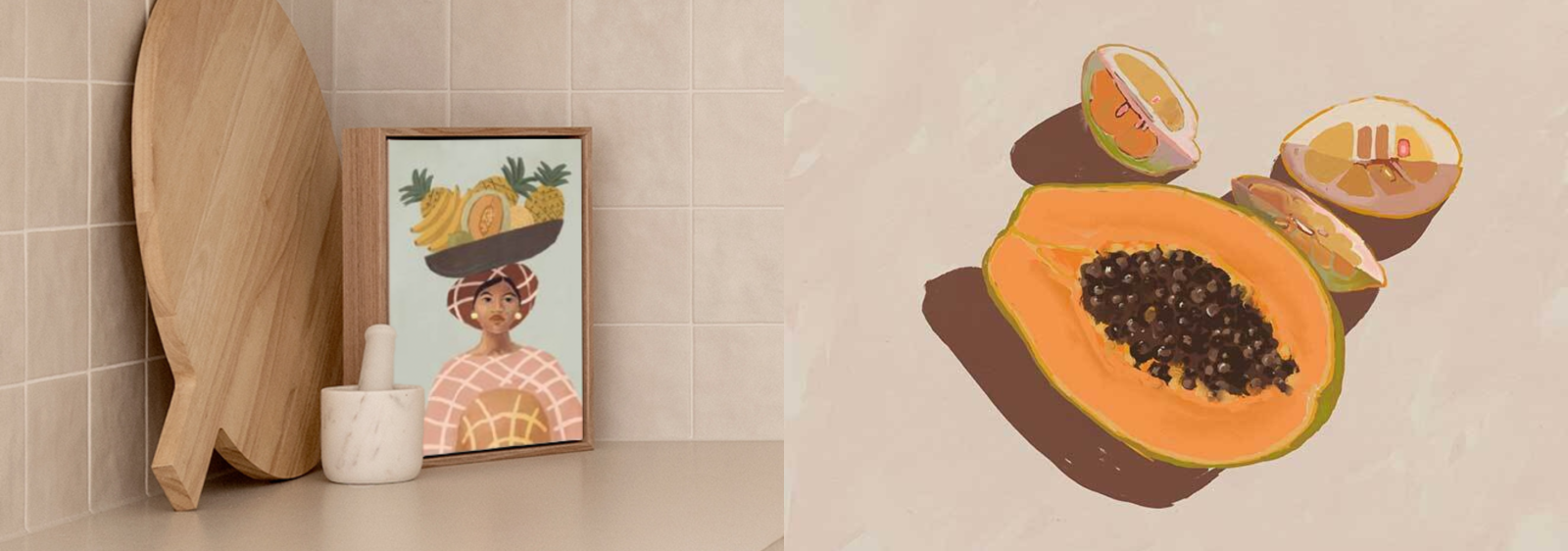
Brightly coloured fruits showcase Mexico's biodiversity and can symbolise abundance. Fruits like the papaya and lime bring a sensory explosion of colour to paintings, reflecting the lush landscapes of the region.
Women in traditional dress
Women dressed in traditional Mexican outfits, with bright flowing dresses and incredible headpieces, are often a celebration of national identity and femininity. These pieces pay homage to the strength and spirit of Mexican women.
Day of the Dead motifs
Sugar skulls represent the Day of the Dead and the cycle of life, while marigolds honour ancestors. Far from being sombre, these motifs are festive and full of affection for those being remembered.
Cacti and the natural world
Cacti symbolise resilience, and the desert and tropical landscapes they belong to give Mexican art much of its earthy grounding, from terracotta tones to lush greens.
Why Is Mexican Art So Colourful?
Colour is huge in artwork from Mexico, and it is far more than decoration. The bold use of colour is a statement of identity and a celebration of the country's cultural richness. Individual hues carry their own meanings: the hot pink known as Rosa Mexicano speaks of joy, festivity and national pride, cobalt blue runs through Talavera pottery and traditional textiles, and marigold yellow is tied to the sun and to Day of the Dead celebrations.
If you are wondering how to actually work with those bold hues at home, our 10 best Mexican artworks guide breaks down the palette and gives room-by-room styling advice.
.png)
Traditional and Contemporary Mexican Art Styles
Folk art traditions
Mexican folk art covers the handmade traditions of the country's many regions: alebrijes (fantastical creatures), papel picado (cut paper art), embroidered textiles and painted ceramics such as Talavera pottery. From tile patterns to textile designs, folk art often features intricate, repeated motifs that create rhythm and movement.
Muralism
Shaped by events like the Mexican Revolution, the mid-20th century muralist movement brought Mexican stories onto vast public walls. Artists like Diego Rivera and David Alfaro Siqueiros proved Mexican art could be both culturally specific and universally meaningful.
Contemporary Mexican-inspired art
Modern Mexican-inspired art blends traditional elements with contemporary aesthetics, maintaining cultural references while working beautifully in modern interiors. Our Wild & Fearless Collection is Urban Road's homage to this tradition. Taking inspiration from the vibrancy of folk art and traditional symbols like the mariachi, pieces such as Frida, Vamos and Vida dulce celebrate the joyful spirit and heritage of Mexico with a modern twist.
.png)
Bringing Mexican Art Into Your Home
Because so much of its power sits in colour and story, Mexican-inspired art works as a focal point in almost any room. A single statement piece like The Siesta or Vaquero brings warmth and personality without overwhelming a space, while a fruit still life such as Sun-Soaked Fruit suits kitchens and dining areas beautifully. Every piece is made to order in your choice of canvas, framed or unframed print.
Ready to choose? See our pick of the 10 best Mexican artworks for your home for the full styling guide.
.png)
Mexican Art FAQs
What is Mexican art known for?
Mexican art is known for bold, saturated colour, rich symbolism, storytelling and handmade folk art traditions. Famous Mexican artists such as Diego Rivera, Frida Kahlo and David Alfaro Siqueiros carried those qualities onto the world stage.
What is often shown in Mexican art?
Recurring subjects include mariachi musicians, brightly coloured fruits, women in traditional dress, sugar skulls and marigolds from Day of the Dead celebrations, and cacti. Each motif carries symbolic meaning, from cultural pride to abundance and resilience.
Why is Mexican art so colourful?
Because colour itself is a form of expression in Mexican culture. Bold hues act as a statement of identity and celebration, with colours like Rosa Mexicano pink, cobalt blue and marigold yellow each carrying their own cultural associations.
What is Mexican folk art?
Mexican folk art refers to the handmade artistic traditions of Mexico's regions, including alebrijes (fantastical creatures), papel picado (cut paper art), embroidered textiles and painted ceramics such as Talavera pottery.
Be wild, be fearless, be free.
Shop art prints, fine art and premium home accessories today.


