


Mexican art is synonymous with vibrant color, bold patterns, and an unmistakable sense of joy. From the deep blues and fiery oranges of traditional Talavera pottery to the intricate symbolism of folk art, Mexican-inspired artwork brings instant energy and personality to any space.
But here's the challenge: how do you incorporate those bold, colorful pieces without your home feeling like a tourist shop or theme restaurant?
How do you honor Mexican culture while creating a space that feels sophisticated, not stereotypical?
This guide will show you exactly how to choose and style Mexican-inspired art in your home. Whether you live in a minimalist apartment, a modern house, or anywhere in between. We'll cover the cultural significance behind Mexican art, how to work with its distinctive color palette, and practical room-by-room styling advice.
.png)
Understanding Mexican Art and Its Cultural Significance
Before diving into decorating, it's worth understanding what makes Mexican art distinctive and why it resonates so powerfully.
Mexican art is rooted in thousands of years of indigenous tradition, blended with Spanish colonial influences and shaped by events like the Mexican Revolution and the mid-20th century muralist movement. Artists like Diego Rivera, Frida Kahlo, and David Alfaro Siqueiros elevated Mexican art on the world stage, proving it could be both culturally specific and universally meaningful.
.png)
What defines Mexican art aesthetics?
Bold, saturated colours: Mexican art embraces color in ways many Western traditions avoid. Bright pinks, deep blues, sunny yellows, and vivid oranges aren't just decorative, they're cultural expressions of celebration, spirituality, and life itself.
Symbolic imagery: Mexican art is rich with symbols: skulls representing the Day of the Dead and the cycle of life, cacti symbolizing resilience, marigolds honoring ancestors, and religious iconography reflecting the country's deep spiritual traditions.
Pattern and repetition: From Talavera tile patterns to traditional textile designs, Mexican art often features intricate, repeated motifs that create rhythm and movement.
Folk art traditions: Alebrijes (fantastical creatures), papel picado (cut paper art), embroidered textiles, and painted ceramics all represent distinct regional Mexican folk art traditions.
Contemporary fusion - Modern Mexican-inspired art blends traditional elements with contemporary aesthetics, maintaining cultural references while working in modern interiors.
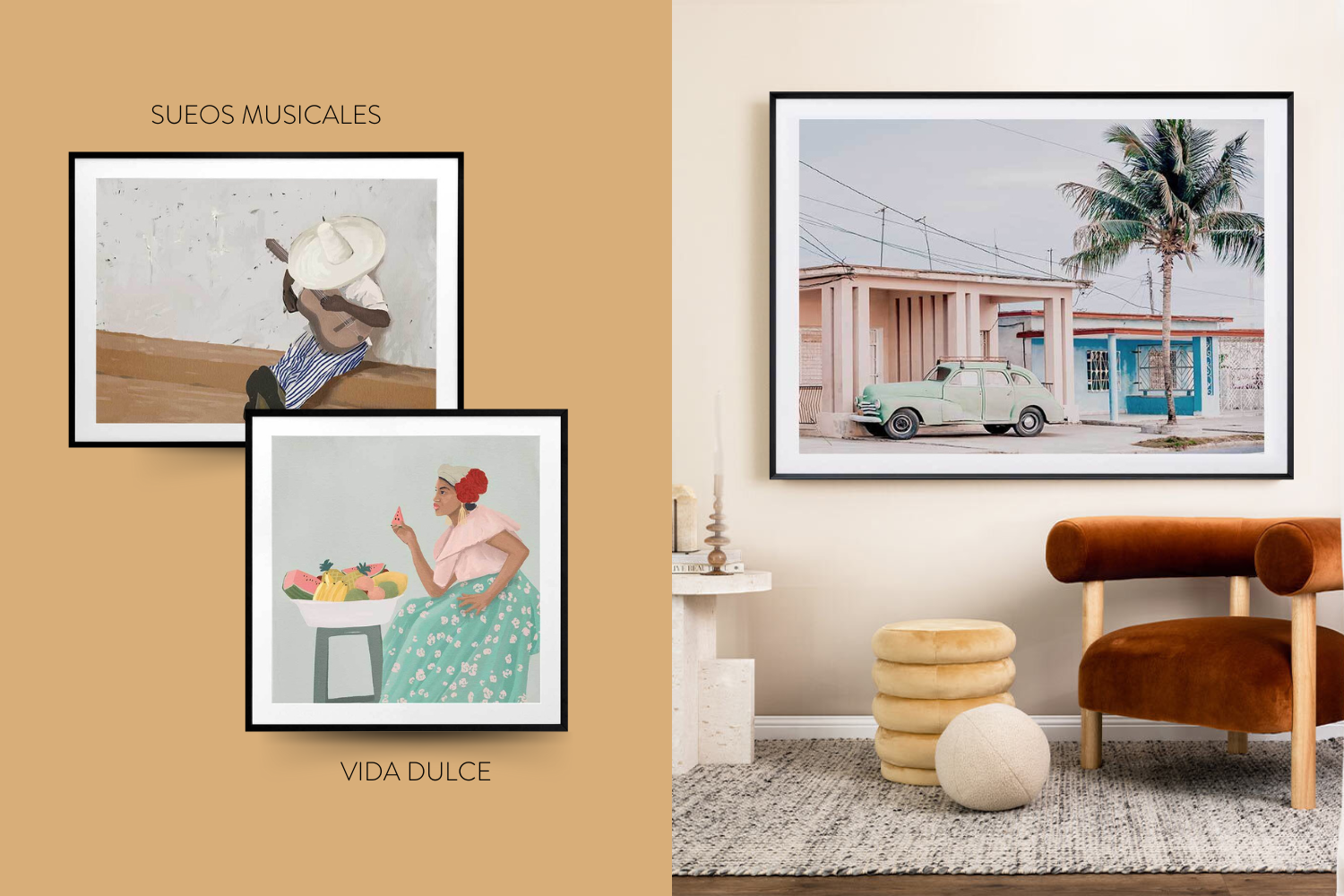
Our Wild & Fearless Collection draws on this rich tradition, featuring Mexican-inspired pieces that capture the spirit of Mexican culture through contemporary art. From mariachi musicians to vibrant fruit still lifes, these pieces honor Mexican artistic traditions while working beautifully in modern homes.
.png)
The Mexican Color Palette: How to Work with Bold Hues
The biggest challenge people face with Mexican art is the color. Those vibrant pinks, oranges, and blues can feel intimidating if you're used to neutral palettes.
Understanding Traditional Mexican Colors and What They Mean
Bright Pink/Magenta (Rosa Mexicano)
This distinctive hot pink represents joy, festivity, and Mexican national pride. It's the color of bougainvillea flowers and traditional festivals.
Terracotta/Burnt Orange
References clay pottery, desert landscapes, and the warm earth. It's grounding and works as a bridge between bold colors and neutrals.
Cobalt Blue
Seen in Talavera pottery and traditional textiles, this deep blue symbolizes loyalty and truth. It pairs beautifully with white and warm terracottas.
Sunny Yellow/Marigold
Associated with the sun, marigolds (used in Day of the Dead celebrations), and positivity. It brings warmth without being overwhelming.
Deep Red
Represents passion, revolution, and cultural pride. Use sparingly as an accent.
Lime Green
References tropical vegetation, cacti, and natural abundance. Works as an unexpected neutral in Mexican-inspired spaces.
.png)
Three Approaches to Mexican Art Color in Your Home
-
Bold Accent, Neutral Base This is the safest approach for beginners. Keep walls, floors, and large furniture neutral (whites, creams, warm greys, natural woods), then introduce Mexican art as your color moment.
Example: White walls, natural jute rug, cream sofa, then add Mariachi at Midnight as your focal point. Pull one or two colors from the art into cushions and small accessories.
-
Warm Earth Tone Foundation Use terracotta, warm tans, and natural materials as your base, which naturally complements Mexican art's vibrant colors.
Example: Terracotta walls or textiles, natural wood furniture, limestone or travertine surfaces. Add Mexican art in blues, pinks, or yellows—the warm base makes even bright art feel grounded.
-
Full Color Commitment For those who love color, embrace multiple Mexican hues throughout the space. The key is balancing saturation levels and using white to give eyes a place to rest.
Example: Cobalt blue velvet chair, terracotta throw, lime green cushions, sunny yellow vessels—but keep walls white and avoid patterns competing with your Mexican art.
The 60-30-10 Rule for Mexican Color
Apply the classic design formula:
-
60%: Neutral base (white, cream, warm grey, natural wood)
-
30%: One dominant Mexican color from your artwork (terracotta, cobalt, pink)
-
10%: One or two accent colors in small doses (vessels, cushions, books)
This prevents color overload while still capturing that vibrant Mexican energy.
Room-by-Room Guide to Styling Mexican Art
Living Room: Creating a Festive Focal Point
The living room can handle Mexican art's boldest expressions because it's a social space meant for energy and conversation.
Best Mexican art subjects for living rooms:
-
Mariachi musicians or cultural scenes
-
Vibrant landscapes with sunset colors
-
Large-scale abstract pieces in Mexican color palettes
-
Folk art-inspired patterns
Styling formula: Place your largest Mexican art piece above the sofa or on the room's biggest wall. This becomes your focal point. Pull 2-3 colors from the artwork into your textiles—one for throw cushions, one for a throw blanket, one for a rug or additional accent.
Practical example using Sueños Musicales:
-
Artwork: Warm oranges, deep blues, golden yellows
-
Sofa: Neutral cream or warm grey
-
Cushions: One terracotta, one deep blue, one cream (mixes colors without overwhelming)
-
Side table: Natural limestone or travertine
-
Accessories: Vanilla cream boucle ball cushion, amber glass vessels
-
Result: Vibrant without being chaotic
SHOP THIS LOOK:
Dining Room & Kitchen: Celebrating Food and Festivity
Mexican culture centers around food, family, and celebration—making Mexican art perfect for dining spaces and kitchens.
Best Mexican art subjects for dining/kitchen:
-
Still lifes featuring fruits (especially tropical fruits like mangoes, papayas, bananas)
-
Market scenes
-
Food and drink themes
-
Vibrant florals
Styling formula: In dining rooms, hang Mexican art above a sideboard or buffet, or on the longest wall. In kitchens, use smaller pieces or a gallery wall of prints. These spaces can handle more playful, food-focused art.
Color consideration: Warm tones like terracotta, peach, and golden yellows actually make food look more appetizing and create a welcoming atmosphere for meals.
Practical example using fruit still lifes: Combine Platano II Pink and Bowl of Pears as a paired set. The soft pinks and peachy tones feel fresh and appetizing.
-
Walls: Soft white or pale cream
-
Dining chairs: Natural wood or upholstered in neutral linen
-
Table linens: Terracotta or rust-colored napkins
-
Ceramics: Mix of white serving pieces with one or two pieces in Mexican colors
-
Result: Festive without being thematic
SHOP THIS LOOK:
Bedroom: Softer Mexican Influences
Mexican art in bedrooms requires a lighter touch. You still want that warmth and color, but in doses that promote relaxation rather than energizing the space.
Best Mexican art subjects for bedrooms:
-
Sunset landscapes in softer tones
-
Botanical prints with Mexican flora
-
Abstract pieces in muted Mexican colors
-
Romantic, dreamy scenes
Styling formula: Choose Mexican art with softer saturation—peachy sunsets rather than bright oranges, dusty rose instead of hot pink, sage instead of lime green. Place above the bed or on the wall opposite your bed (what you see when you wake up).
Avoid: Busy patterns, highly saturated colors, or energetic scenes that might feel overstimulating in a sleep space.
Color palette for Mexican-inspired bedrooms:
-
Base: Soft white, cream, or pale terracotta walls
-
Bedding: Natural linen in cream, white, or soft peach
-
Art: Choose sunset scenes or abstracts in warm, muted tones
-
Accents: One or two cushions in deeper Mexican colors, natural wood furniture
SHOP THIS LOOK:
Entryway: Setting the Tone
Your entryway is the first impression of your home—making it perfect for a statement piece of Mexican art that announces your style immediately.
Best Mexican art subjects for entryways:
-
Bold, confident portraits
-
Vibrant abstracts
-
Cultural scenes that tell a story
-
Architectural elements (arches, doorways)
Styling formula: In entryways, you often have limited wall space, so go for impact. Choose one bold piece rather than a gallery wall. Hang it at eye level (center at 145-150cm), and keep surrounding decor minimal so the art shines.
Practical tip: Entryways can handle bolder colors than other rooms because you're just passing through. This is your chance to be brave with color.
SHOP THIS LOOK:
How to Mix Mexican Art with Other Styles
One of the biggest questions people have: can Mexican art work with my existing style? The answer is almost always yes—here's how.
Mexican Art + Modern Minimalist
The approach: Let Mexican art be your ONLY color moment in an otherwise neutral, minimal space.
Formula:
-
White or pale walls
-
Clean-lined furniture in neutrals
-
One large-scale piece of Mexican art
-
Minimal accessories in natural materials
Why it works: The contrast between minimal surroundings and vibrant art creates drama and makes both elements more interesting.
Mexican Art + Bohemian/Eclectic
The approach: Mexican art naturally fits bohemian style—just layer it with other global textiles and patterns.
Formula:
-
Mix Mexican art with Moroccan rugs, Indian textiles, global ceramics
-
Use natural materials throughout (rattan, jute, wood)
-
Don't be afraid of pattern mixing
-
Keep to a warm, earthy color palette even when using multiple patterns
Why it works: Bohemian style celebrates global influences, and Mexican art's handcrafted quality fits perfectly with collected, eclectic interiors.
Mexican Art + Coastal/Mediterranean
The approach: Focus on Mexican art with blues, whites, and terracottas—the overlap between coastal and Mexican palettes.
Formula:
-
White walls as base
-
Natural textures (jute, linen, whitewashed wood)
-
Mexican art featuring blues or sunset scenes
-
Terracotta accents that work in both styles
Why it works: Mexican coastal towns and Mediterranean villages share similar aesthetics—white-washed walls, terracotta tiles, blue accents, and relaxed vibes.
SHOP THIS LOOK:
Mexican Art + Scandinavian Hygge
The approach: This seems contradictory (Mexican vibrancy vs. Scandinavian minimalism), but it can work if you focus on warmth over brightness.
Formula:
-
Keep Scandinavian principles: light walls, natural materials, minimal clutter
-
Choose Mexican art in muted tones (dusty pinks, warm terracotta, soft yellows)
-
Use Mexican art to add the warmth Scandinavian spaces sometimes lack
-
Stick to one statement piece rather than multiple
Why it works: Both styles value handcrafted quality and natural materials. Mexican art brings warmth to Scandinavian coolness.
Complementary Collections: Mixing Mexican with Western Art
One unique aspect of our Wild & Fearless Collection is how Mexican-inspired pieces work beautifully alongside Western cowboy art. This isn't random—there's genuine cultural and aesthetic overlap.
Why do Mexican and Western art pair well?
Shared geography: The American Southwest and Northern Mexico share landscapes, architectural styles, and cultural influences. Desert sunsets, adobe buildings, and warm earth tones appear in both traditions.
Similar color palettes: Terracotta, warm browns, sunset oranges, dusty pinks, and turquoise appear in both Mexican and Western art.
Cultural overlap: Mexican cowboys (vaqueros) actually predate American cowboys and heavily influenced Western cowboy culture. Saddles, lassos, and cowboy style originated in Mexico.
Practical styling: Mix pieces like Mariachi at Midnight with cowboy portraits, or pair Mexican fruit still lifes with Western landscape photography. The warm, earthy tones create natural bridges between the styles.
You can also explore our Cowboy Like Her Poster Collection, featuring American cowgirl-inspired pieces in soft pinks, creamsicle oranges, pale blues, and silver shades. These contemporary Western pieces share the festive, colorful energy of Mexican art while offering a different cultural perspective.
FEATURED COLLECTION PIECES:
.png)
Common Mistakes When Decorating with Mexican Art
Mistake 1: Going Too Literal or Thematic
The problem: Sombreros, piñatas, sugar skulls, and "Mexican restaurant" decor crosses from appreciation into stereotyping.
The fix: Choose contemporary Mexican-inspired art that references cultural elements through color, pattern, and subject matter without being literal. A painting of a mariachi musician works; plastic margarita signs don't.
Mistake 2: Too Many Bright Colors at Once
The problem: Mexican art is colorful, but that doesn't mean every color at maximum saturation in one room.
The fix: Choose 2-3 main colors from your artwork and stick with them. Use the 60-30-10 rule. Give the eye places to rest with neutrals.
Mistake 3: Ignoring Scale and Proportion
The problem: Mexican art's boldness can overwhelm if the piece is too large for the wall or room.
The fix: Follow the standard art sizing rules—artwork should be 2/3 to 3/4 the width of furniture below it, with 15-25cm gap between furniture and frame.
Mistake 4: Neglecting the Frame
The problem: Ornate, carved wooden frames can push Mexican art into "too much" territory.
The fix: Let the art provide the decorative element. Choose simple frames in natural wood, white, or black that don't compete with the artwork's vibrancy.
Mistake 5: Forgetting About Lighting
The problem: Vibrant colors look dull or garish in poor lighting.
The fix: Mexican art needs good lighting. Use warm white bulbs (2700-3000K), add picture lights for dramatic effect, or ensure artwork is near natural light sources.
Practical Shopping Guide: Choosing Your Mexican Art
When selecting Mexican-inspired art for your home, ask yourself these questions:
1. What emotion do I want in this room?
-
Energetic and social → Bold mariachi scenes, vibrant abstracts
-
Calm and relaxed → Softer sunset landscapes, muted florals
-
Welcoming and warm → Food still lifes, friendly cultural scenes
2. What's my existing color palette?
-
Mostly neutrals → You have freedom to go bold with Mexican art
-
Already colorful → Choose Mexican art that complements, not competes
3. How much wall space do I have?
-
Large empty wall → Statement piece 100-150cm wide
-
Smaller wall → 40-80cm piece or gallery wall of smaller prints
-
Gallery wall → Mix 3-5 pieces in varying sizes
4. What's my commitment level?
-
Testing Mexican style → Start with one medium-sized piece, assess
-
All-in on Mexican energy → Invest in larger pieces and multiple rooms
-
Want flexibility → Choose pieces in versatile colors (terracotta, soft pink)
Bringing It All Together: Your Mexican Art Action Plan
Ready to incorporate Mexican art into your home? Here's your step-by-step process:
Step 1: Choose one room to start. Don't try to redecorate your entire home at once.
Step 2: Select one piece of Mexican art that speaks to you. Let this guide your color decisions.
Step 3: Identify 2-3 colors in the artwork. These become your palette.
Step 4: Keep 60% of your room neutral. This is crucial for balance.
Step 5: Introduce your Mexican colors through textiles first (cushions, throws)—they're easy to change if you don't love the combination.
Step 6: Add one or two accent pieces (vessels, ceramics) in complementary colors.
Step 7: Assess and adjust. Live with it for a week, then tweak as needed.
Mexican art brings joy, warmth, and cultural richness to any space. The key is balancing that vibrant energy with restraint—letting the art shine without overwhelming your home. When done right, Mexican-inspired interiors feel festive and sophisticated, colorful and collected, energetic and welcoming.
Ready to bring Mexican energy into your home?
Explore our Wild & Fearless Premium Art Collection featuring Mexican-inspired artwork from mariachi musicians to tropical still lifes, designed to bring color and culture to contemporary homes.